

Estimated Ship Date
When you think about insane moments captured in motion, it rarely begins with a tripod or a bulky camcorder. Instead it begins with something small, rugged, ready for anything, and often mounted in a place no one expected a camera to live. Action cameras have become as essential to adventure culture as good tires and a well-built rack. And while many names have come and gone in the landscape of action cameras, one brand has stood above the rest, defining what this category even means. That brand is GoPro.
Before there was GoPro, there was an itch in the hearts of motorheads and explorers for cameras that could keep up with reality rather than force reality to slow down for them. The early 2000s brought digital cameras that were lighter and smaller than the camcorders of old. But they still weren’t built for hard hits, dust storms, mud splashes, and high-G cornering. People cobbled rigs together, secured point-and-shoots to helmets, and dreamed of something better. They wanted motion without fragility, immersion without fear, and the ability to relive the exact moment the turbo kicked in, the dirt dripped off the roll cage, or the bike hit the apex.
Then came a small, cube-like device that changed everything.

GoPro didn’t invent the idea of filming yourself doing something insane. What GoPro did was make it easy, rugged, and iconic. The first GoPro cameras were ruggedized traditional film cameras, and launched in the early 2000s with a simple mantra - capture life’s most intense moments without worrying about breaking the gear. The brand came from surfer culture, where riding big swells meant being tossed, underwater, and off the board in a heartbeat. Those early cameras were waterproof, mountable, and built to take punishment. That DNA remains in every model today.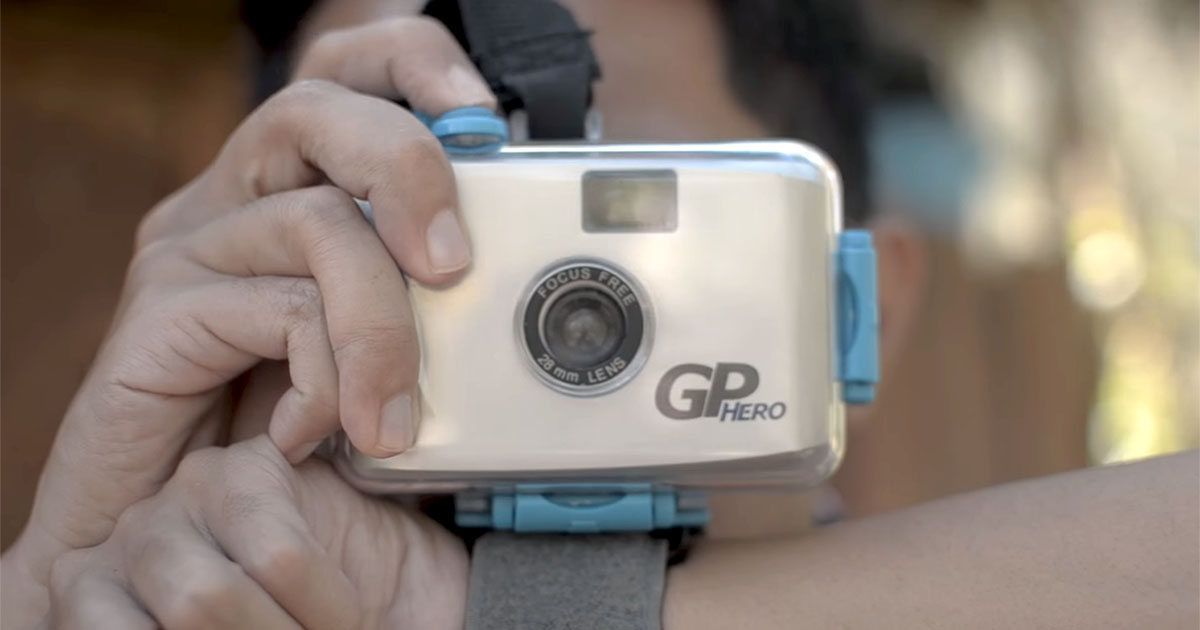
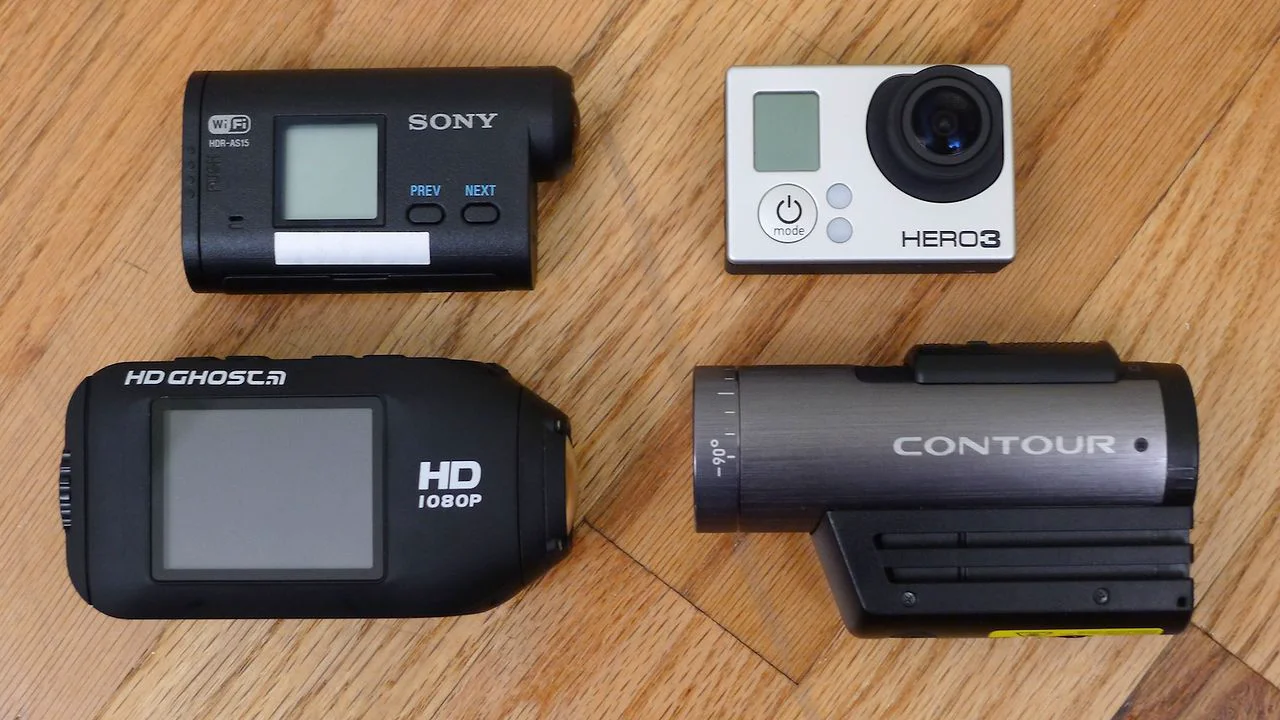
Other brands took notice. Suddenly there were competitors like Contour and Sony promising similar rugged footage, some had similar specs, and some tried gimmicks. Some were good for a season or two before disappearing. Names that sounded promising faded because they lacked that one thing GoPro built over years - trust (and a crazy marketing strategy.... which I'll cover in a bit).
Trust comes from reliability, durability, ecosystem, and community. People didn’t just buy a GoPro. They bought confidence. Whether you were a weekend trail rider, a professional racer, or someone documenting a once-in-a-lifetime road trip, GoPro became shorthand for action footage that didn’t quit when the adventure heated up.
As action cameras grew in popularity, competitors rushed in. You saw cameras from every corner of the tech world. Some were cheap knock-offs that looked like GoPro but performed poorly in low light or high vibration. Others tried adding unnecessary bells and whistles that distracted from the core purpose - capturing clear, smooth action footage.
Some brands promised 4K before it was practical. Others tried 360-degree views that were cool on paper but clumsy in real world use (although, Insta360 is slowly changing that). A few managed solid video quality but couldn’t handle heat, dust, or impact. Many relied on fragile housings that cracked easily or software that was clunky and slow. This made them tools people would rather not even mess with.
Off-road and motorsports culture doesn’t forgive gear that fails when you need it most. Sand, mud, dust, heat, vibration, speed, gravity changes, and all-day sunshine are all part of the terrain. When gear breaks or footage drops out at the worst moment, your hot laps or trail climbs freeze into a frustrating memory rather than a shareable story.
Meanwhile GoPro continued refining its cameras for exactly these conditions. Frame rates increased. Image stabilization got smarter. Form factors shrank, or stayed the same while strength increased and batteries and sensors got larger. Mounting options multiplied. Batteries improved. Software workflows became seamless. Video quality became cinematic.
People began to realize that the competitors didn’t just need to match specs. They needed to match the experience. And people were saying, with almost religious fervor, that nothing else quite did.
What makes GoPro the action camera most people reach for isn’t just specs on a sheet. It is the way it handles jarring bumps and grit without blinking. It is the way it slips into your pack or clips onto your gear so effortlessly that preparation becomes part of the fun, not a chore.
GoPro understood early that adventurers don’t want gear that complicates life. They want gear that disappears into the background while capturing life in the foreground. From the rugged HERO line to the innovations in stabilization technology, GoPro cameras became less about gadgets and more about storytelling.
Marketing. Is. Everything.
A large part of what has kept GoPro at the top of the action camera market isn’t just engineering - it’s marketing strategy. From the beginning, GoPro didn’t market megapixels or frame rates first. They marketed lifestyle. Their early campaigns were packed with surf wipeouts, skydives, rally cars, mountain bikes, and desert racing. Instead of traditional product-focused ads, GoPro pushed user-generated content long before it became standard practice in digital marketing. They built a brand around adrenaline, risk, and authenticity. Social media feeds were filled with jaw-dropping clips shot by real users, not polished studio crews. That approach created community buy-in. People didn’t feel like they were buying a camera. They felt like they were joining a movement. One of the boldest moves in GoPro history was the Million Dollar Challenge - an annual campaign where users submit their best raw footage shot on the latest HERO camera for a chance to split a $1,000,000 prize pool. It’s aggressive, brilliant marketing. Instead of paying for traditional ads, GoPro turns its customers into filmmakers, floods the internet with authentic high-adrenaline content, and reinforces one clear message - the best moments on earth are being captured on a GoPro.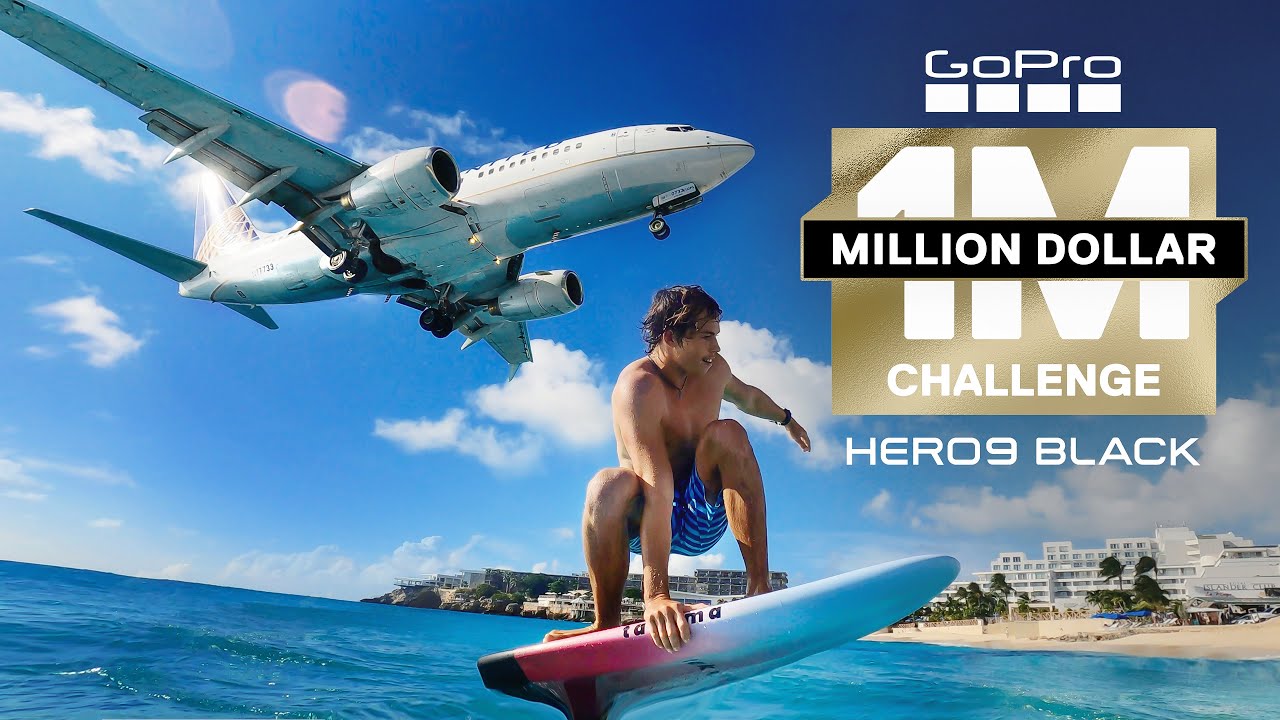
GoPro also aggressively partnered with athletes, motorsports teams, and off-road influencers. When fans saw professional racers and hardcore trail runners using the same camera they could buy themselves, it reinforced credibility. Add in product launch hype cycles, constant firmware updates, and strategic retail placement, and GoPro maintained visibility even as competitors tried to undercut pricing. In a crowded field of action cameras, GoPro made sure its name stayed synonymous with the category itself - a branding move so strong that many people refer to any action camera as a “GoPro,” even when it isn’t.
If you have ever watched off-road racing, desert sprints, rally stages, or motocross heats, you have seen footage that feels like you are right in the driver’s seat. That is the magic of action cameras. In motorsports, these devices have become as essential as helmets, radios, and transponders.
Mounted on roll cages, dashboards, helmets, handlebars, and even on the riders themselves, action cameras bring fans into the cockpit in a way traditional broadcast cameras never could. You see every bump, every drift, every wheel slip. You hear the engine roar, the gravel scrape, and the wind whip. The footage becomes visceral because the camera isn’t filming from the sidelines. It is part of the machine.![GoPro HERO 10: Best Motorcycle Onboard Camera [4K]](https://i.ytimg.com/vi/5bIVVhr_6OY/maxresdefault.jpg)
Professional racers rely on action cameras not just for highlight reels, but for analysis. Reviewing footage helps teams understand suspension behavior, line choices, braking points, and impacts that are subtle to the driver but critical for improvement. These cameras have become tools for performance, not just documentation.
And because motorsports environments are unforgiving, only the toughest cameras survive. That is why GoPro remains the go-to. It is designed to endure the shakes and shocks of high speed, the heat of engines running all day, and the grit that clogs every crevice. Lesser cameras might sputter or die. GoPro keeps rolling.
Off-roading is about more than speed. It is about discovery. It is about moments that defy words. The first time you crawl up a tricky rock face and make the summit. The first river crossing you conquer with your rig. The look of sunset on distant peaks after a long day on the trail. These are the moments people want to relive, not just recall.
Action cameras mounted on bumpers, roof racks, hoods, and seats capture trails in a way that feels immersive. When you pair that footage with stable, wide-angle views and clear audio from onboard mics, it creates a story that photos alone can never tell. You don’t just show where you went. You let others feel like they were right there with you.
For the off-road community, sharing these adventures has become a way to inspire others, trade tips, and build connections. Someone posting a trail run with their GoPro may influence someone else to explore a new route, try a different vehicle setup, or upgrade their gear. The footage isn’t just content. It becomes currency in a community that thrives on shared experience.
Action cameras will continue to evolve. Higher resolution, smarter sensors, better stabilization, and connectivity that lets you share moments instantly will all push this category forward. But one thing is certain - the core need will always be the same. People want to capture life being lived at its fullest, without fear of gear failure.
GoPro still leads because it built its brand on that principle, and it continues to innovate in ways that matter. Other cameras will rise and fall, but the ones that endure will be the ones that understand adventurers as well as they understand pixels.
At BuiltRight Industries, we appreciate that mindset. Our gear isn’t just about strength. It is about enabling your best moments and making sure the memories you create are just as bold as the journeys you take.
So mount that camera, hit that record button, and ride as hard as you dare. The footage you capture isn’t just video. It is proof of the stories you will tell for years to come.
GM Wants L87 6.2L Owners to Change Oil Type.....Again
The Updated Ram TRX Is Back - And It’s Coming for the Raptor R