

Estimated Ship Date
For the last few years, it feels like every new truck announcement has followed the same formula. Bigger screens, bigger prices, more luxury features, and somehow another 1,000 pounds added in the process.
Then Slate Auto showed up and went in the complete opposite direction.
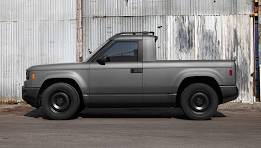
The new Slate Truck is basically the anti-modern pickup. It’s small, simple, intentionally stripped down, and honestly feels more like an old compact truck brought into 2026 than some futuristic EV experiment.
And weirdly enough, that’s exactly why so many people are paying attention to it.
At its core, the Slate Truck is a compact two-door electric pickup built around simplicity and customization.
No giant infotainment screen.
No giant luxury interior.
No powered everything.
The base truck even comes with crank windows and no built-in stereo system. Instead, it’s designed around using your own phone or tablet for navigation, music, and apps.
That sounds ridiculous at first until you realize how many people are completely burned out on modern vehicles becoming rolling iPads (looking at you, Ram, Tesla, Ford, Chevy....okay basically everyone now)
Slate’s entire idea is basically this: start with a simple platform and let owners build it into what they want.
The truck itself is intentionally modular. You can leave it as a compact pickup or convert it into an SUV or work truck using accessory kits the company plans to sell later.
Honestly, it feels closer to an old Toyota Pickup or vintage Ford Ranger philosophy than anything currently on sale.
One of the more interesting things about the Slate Truck is its size.
This thing isn’t trying to compete directly with trucks like the Ford F-150 or Ram 1500. It’s much smaller and way more basic.
That’s intentional.
There’s a growing group of buyers that don’t necessarily want a giant half-ton truck anymore. They want something practical, easier to park, easier to work on, and cheaper to own. Something that's perfect for the more and more congested city driving we are seeing everywhere, where a crew cab long box (while more capable for hauling and such) just doesn't quite work.
Slate seems to understand that better than most manufacturers right now.
And visually, it almost looks refreshing because of it. Flat panels, simple shapes, minimal clutter. It doesn’t look overdesigned.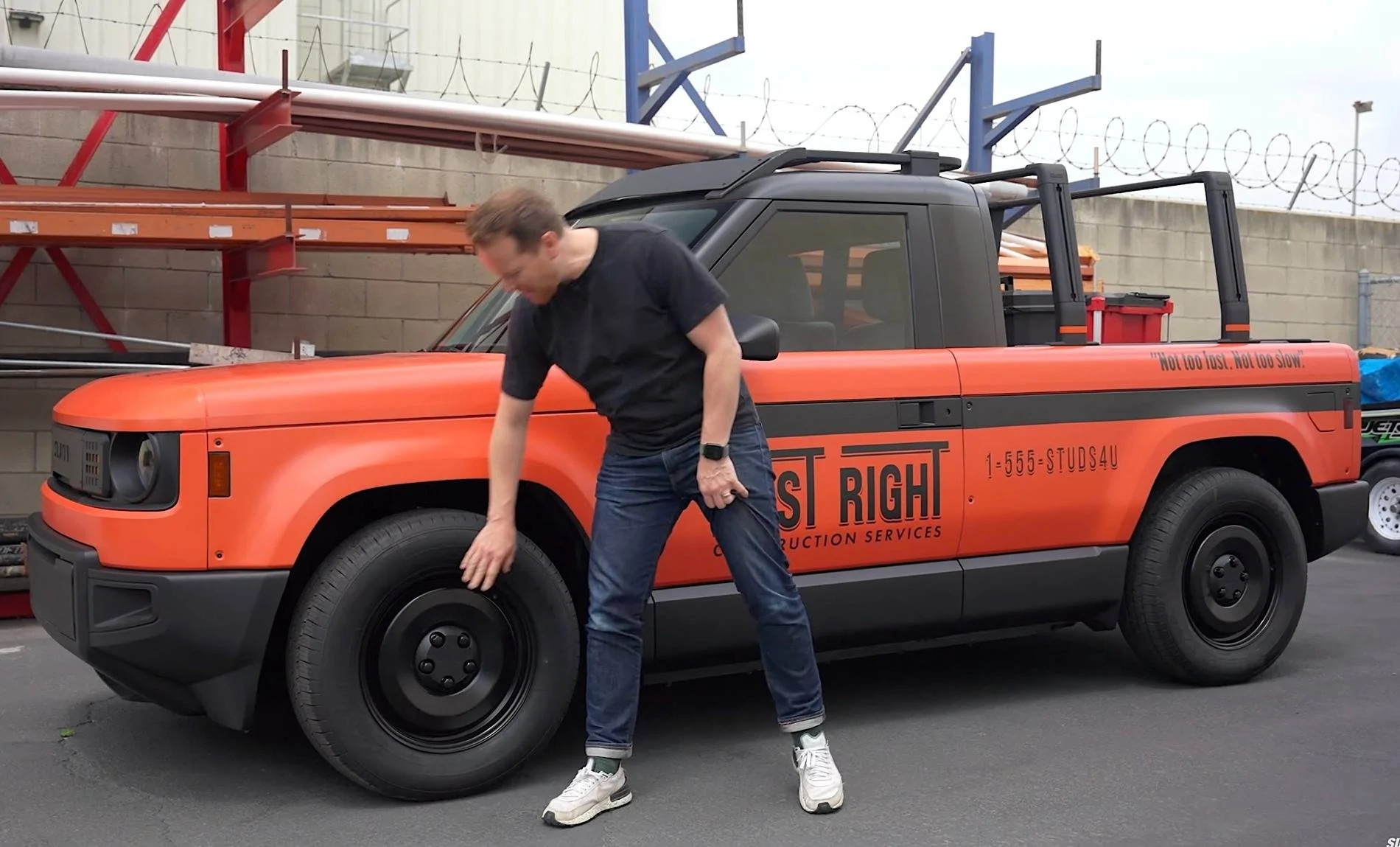
Originally, Slate made headlines by saying the truck could land under $20,000 after incentives.
That number has changed a bit since EV incentives started shifting, and now the company is talking more realistically about pricing in the mid-$20,000 range.
Even so, that’s still extremely aggressive for a new EV truck.
Especially one being built in the United States.
And that affordability is really the whole point. Slate isn’t trying to beat luxury EVs. They’re trying to build something normal people can actually afford again.
This is where things get interesting.
Unlike a lot of EV startups that are still floating around in renderings and promises, Slate is actually pretty far into development.
The company already revealed functional prototypes publicly in 2025, has secured major funding, and is actively preparing its production facility in Warsaw, Indiana.
Production is currently targeted for late 2026, with low-volume deliveries expected to begin toward the end of the year before scaling up further in 2027.
That said, anyone who follows the auto industry knows startup timelines are always optimistic.
Scaling production is where companies either become real automakers or disappear entirely. We’ve already watched companies like Fisker, Lordstown, Canoo, and Nikola struggle or collapse trying to make that jump.
Slate still has to prove it can actually manufacture these things at scale and keep costs under control.
But compared to most startups, they at least appear to have a more realistic plan.
One thing helping Slate stand out is the amount of backing behind it.
The company has raised serious money, including backing tied to Jeff Bezos and other major investors. Earlier this year, Slate announced another $650 million funding round to help push the truck toward production.
That doesn’t guarantee success, but it does mean they have more runway than a lot of startups that burned through cash before reaching production.
They’ve also reportedly passed 160,000 reservations already, which is a pretty massive amount of interest for a vehicle that intentionally avoids most modern luxury features.
The funny thing about the Slate Truck is that it almost feels less like an EV story and more like a return-to-basics truck story.
People miss simple trucks.
They miss vehicles that feel modular, customizable, and easy to live with. The Slate concept taps directly into that.
And honestly, the lack of giant screens and overcomplicated interiors might end up being one of its biggest selling points.
It also opens up a lot of interesting possibilities for the aftermarket. Mounting systems, storage solutions, wraps, utility accessories, lighting setups, modular interiors, there’s a lot of room for companies to build around a platform that’s intentionally designed to be customizable.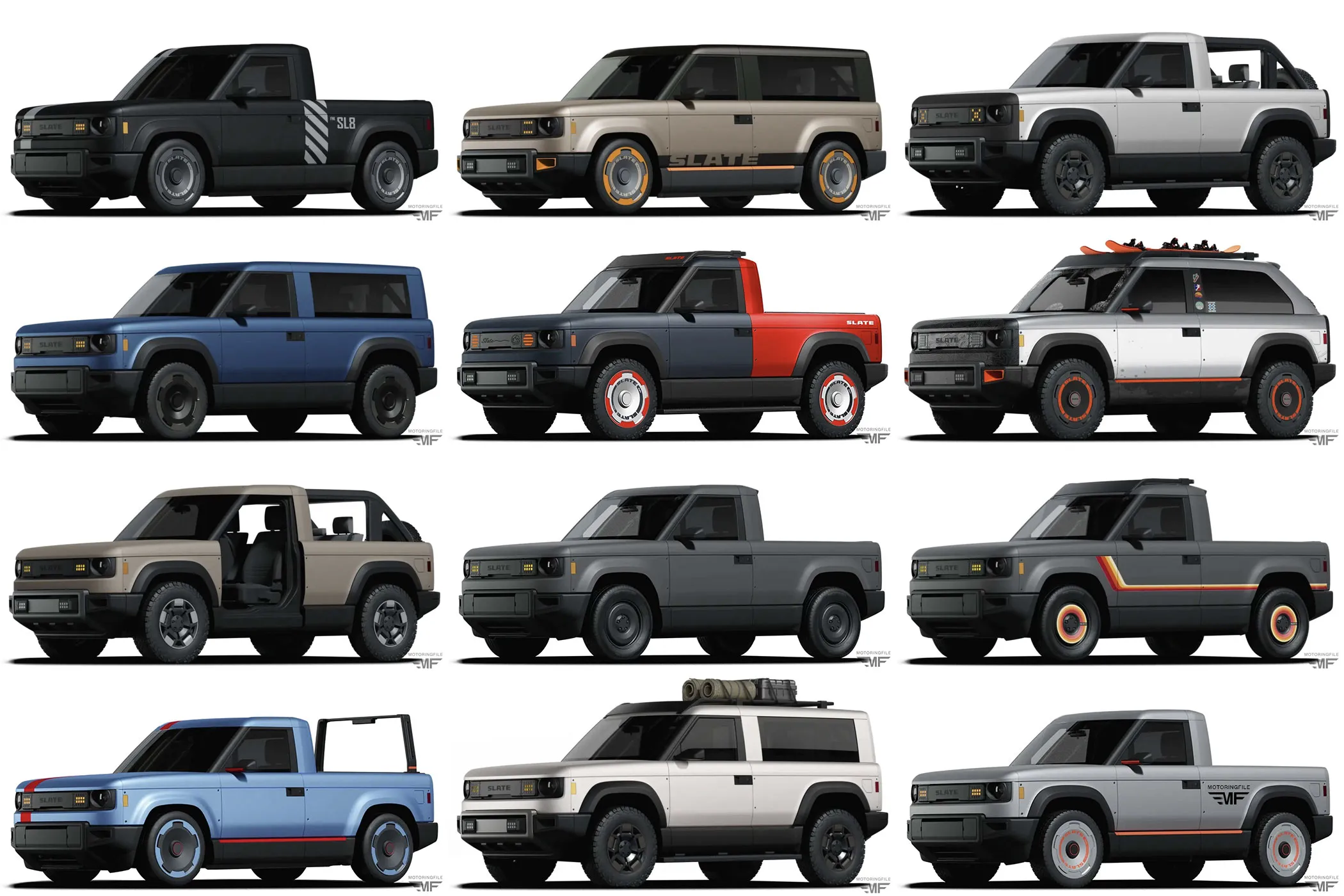
Right now, the Slate Truck feels like one of those ideas that either completely works or completely falls apart.
There probably isn’t much middle ground.
If they can actually hit production, keep pricing reasonable, and maintain the simplicity people are excited about, they could carve out a really unique space in the market.
But getting from prototype hype to mass production is still the hardest part of the automotive world.
For now though, the fact that a simple little electric pickup with crank windows is generating this much attention probably says a lot about where truck buyers’ heads are at right now.

Scout Motors Hit Pause - And Why That Matters
Ram’s Sales Comeback Proves Truck Buyers Still Know Exactly What They Want
3 comments
When I ran across this truck on line right away I wanted to test drive one.My 1970 c10 is my favorite vehicle that I own that’s why this truck excites me.
Great! A comeback to the Model T pick-up. Back to Basics and practicality. I’m for it. I’ve been a gasoline and diesel mechanic all my life. All the oils and chemicals that these machines use and are just nasty to clean up . Toxins and pollutants that are so cancer causing! Looking forward to inexpensive electric pickup!
It’s about time some one got it. If you could charge with 110v , and plug into it if I lose power. It would be perfect. I have a Rav 4 for long range drives. This is a perfect 2 nd car. I’m thinking 2 solar collectors. I’m retired and don’t always drive any place.