

Estimated Ship Date
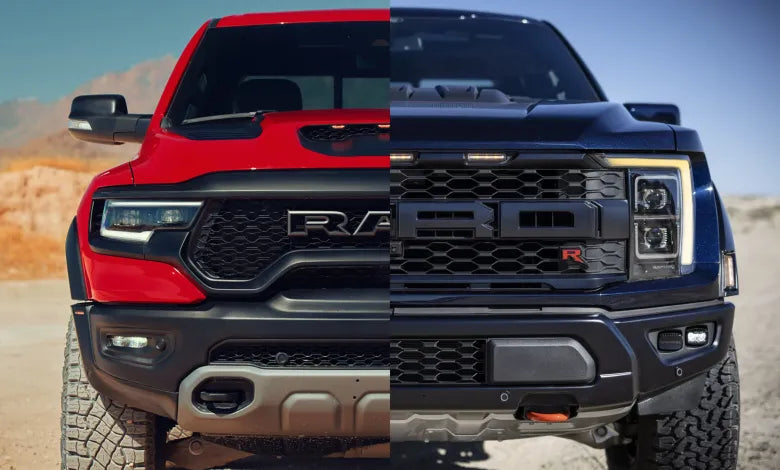
For a couple years, the “who’s king?” conversation in the high-performance off-road truck world was basically a two-truck debate: Ram TRX vs Ford Raptor R. Then the TRX disappeared, leaving the Raptor R sitting on the throne by default. That didn’t last long.
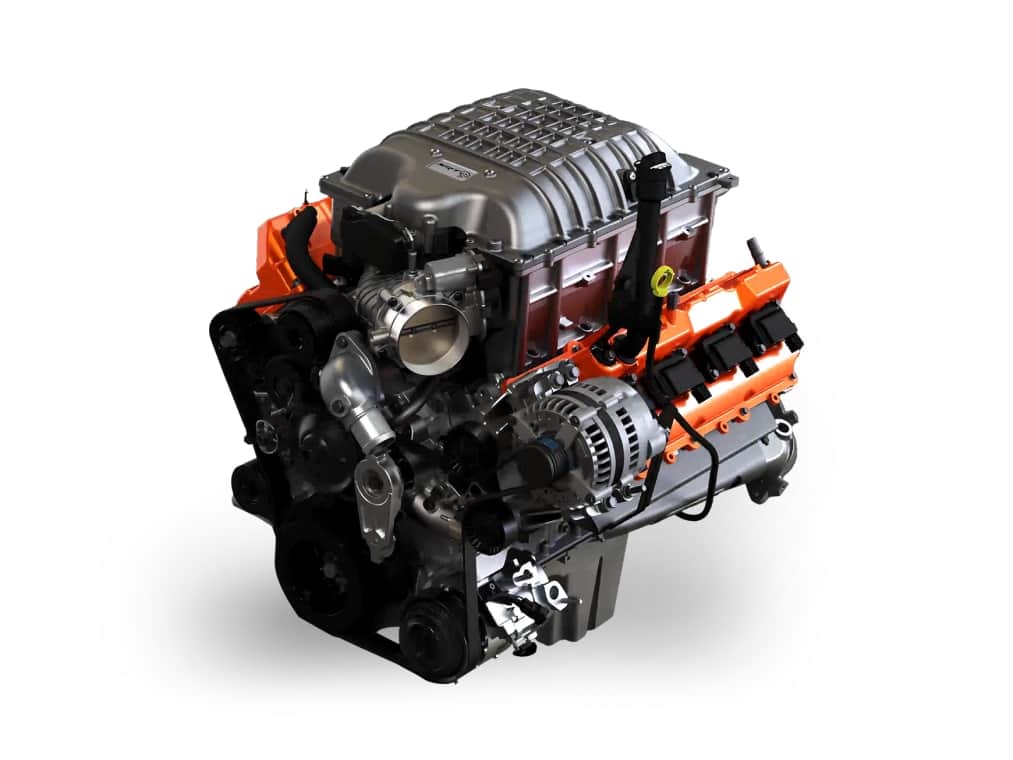
Ram’s TRX is officially back in SRT form with a headline number that matters in this segment more than anywhere else: 777 horsepower from a supercharged 6.2L HEMI V8.
Ford’s counterpunch remains the Raptor R with 720 horsepower from its supercharged 5.2L V8.
On paper, Ram just retook the spec-sheet crown. The more interesting story is how the updated TRX and the current Raptor R get their performance, where each truck is likely to feel stronger, and what those differences mean if you actually use these trucks the way they were built to be used.
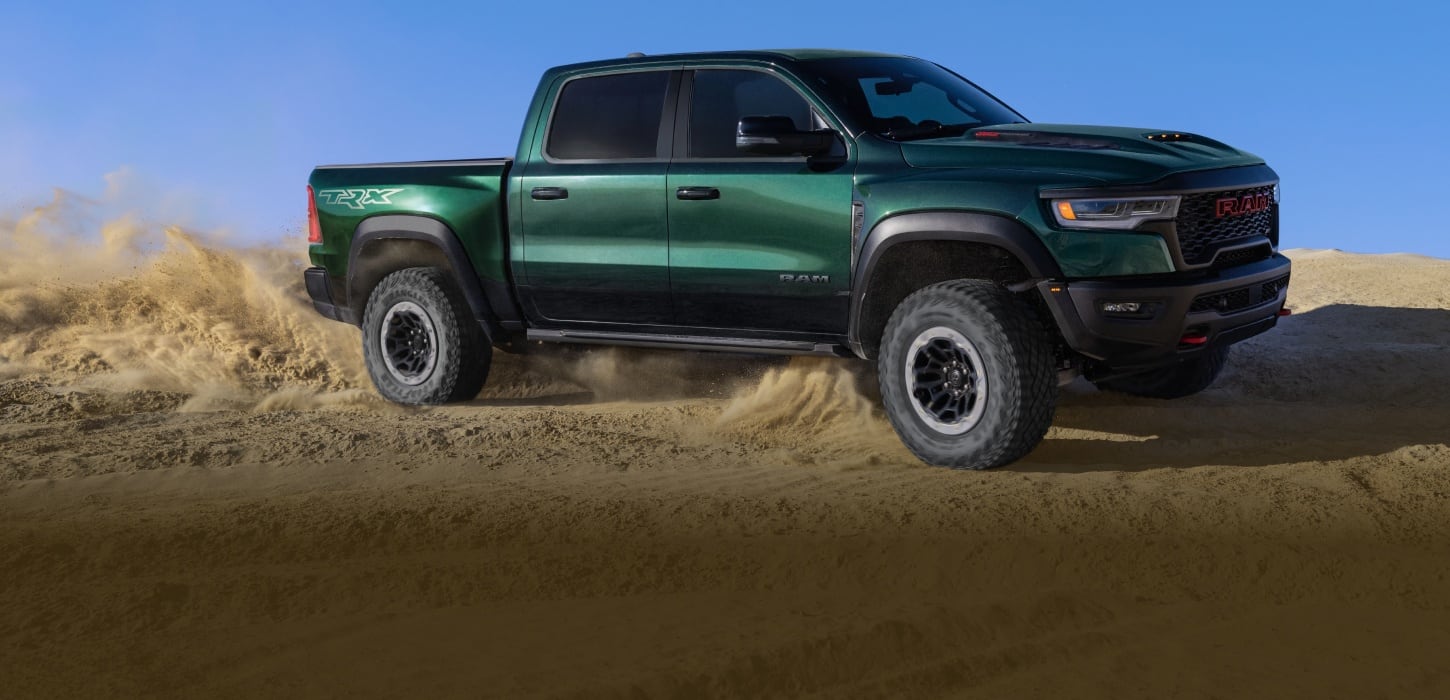
Both trucks live and die by forced induction V8 torque, and both deliver the kind of midrange punch that makes a 6,000+ lb truck feel legitimately violent.
Ram’s updated TRX sticks with the supercharged 6.2L formula, but the new output bump to 777 hp and 680 lb-ft is credited to revised engine management and upgraded hardware. That torque number matters because it tends to show up everywhere you actually drive one of these trucks - merging, passing, climbing, ripping sand washes, yanking out of a slow corner.
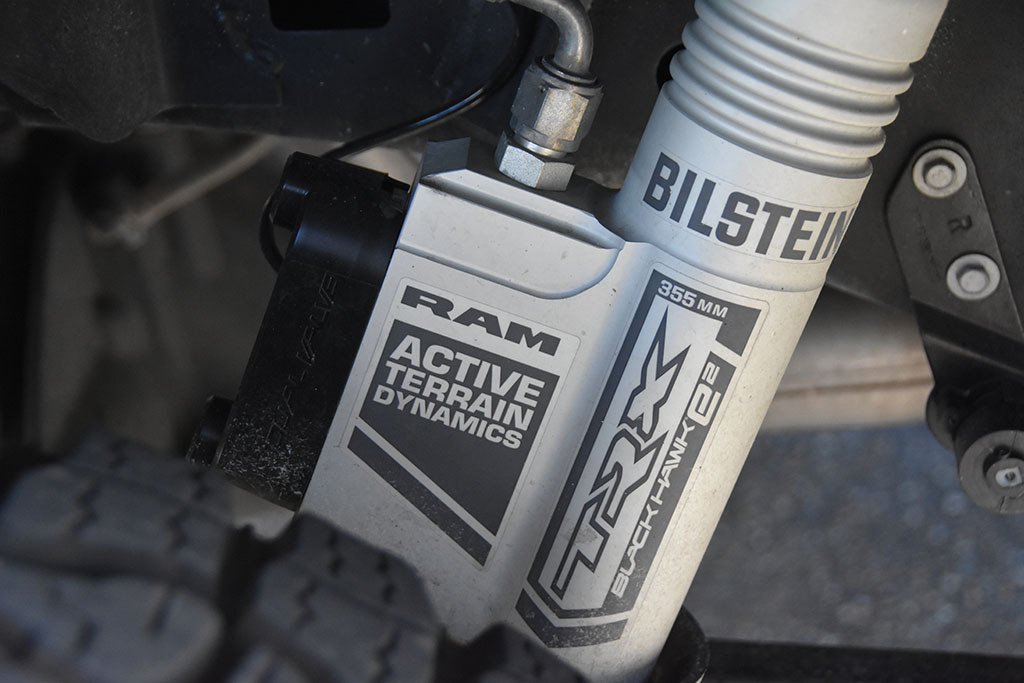
Ram’s own TRX page also frames the chassis and suspension system as purpose-built to “put all 777 horses to the ground,” paired with Bilstein Black Hawk e2 shocks.
Ford’s Raptor R keeps the 720 hp 5.2L supercharged V8 and pairs it with Fox racing shocks and 37-inch tires, which is a huge part of why the Raptor R feels so composed at speed in chop and whoops.
Car and Driver lists the Raptor R at 720 hp and 640 lb-ft, which is still an absurd number in a production pickup.
Real-world takeaway: the updated TRX is likely to feel stronger in pure “roll-on” acceleration and heavier-load situations (more torque helps everywhere), while the Raptor R continues to lean into high-speed stability and obstacle compliance via tire and suspension strategy.
The TRX returns with 11.8 inches of ground clearance, 13 inches of front travel, and 14 inches of rear travel on Ram’s own spec language. That travel split is classic “fast off-road” geometry - keep the rear able to absorb and drive while the front stays controlled under braking and turn-in.
Car and Driver also calls out second-generation Bilstein Black Hawk e2 adaptive shocks, which points to more bandwidth between “composed on-road” and “let it eat off-road.”
Ford explicitly calls out the Raptor R’s 37-inch tires alongside its Fox shock setup. The 37-inch tire is not just a flex number - it changes breakover angles, it changes how the truck bridges gaps, and it changes how the suspension can be valved because the tire itself becomes part of the suspension system at speed.
Real-world takeaway: if your off-road life is more “hit rough terrain fast and keep it pinned,” both trucks are built for it. The TRX is pushing a power-and-travel narrative hard. The Raptor R’s 37s remain a meaningful hardware advantage when terrain gets sharp, deep, or unpredictable.
Ram is quoting a 0-60 mph time of 3.5 seconds for the updated TRX. Even if you never launch it like that in the real world, that number tells you what you need to know: this truck is tuned to put power down, not just make noise. For reference, the Raptor R claims a 3.6 second time, so it will be interesting to see if the TRX can actually hit that number in real world testing.
That’s where the TRX vs Raptor R debate will stay interesting even with Ram reclaiming the horsepower headline.
If you care about the headline spec war: the updated TRX takes it with 777 hp and 680 lb-ft. If you care about proven hardware advantages off-road: the Raptor R’s 37-inch tire setup remains a real-world edge in a lot of terrain. If you actually use either truck hard: power is fun, but suspension bandwidth, repeatability, and how you outfit the truck for your style of travel is what determines whether you have a good day - or a long one.
GoPro: The history and rise of the most famous name in action cameras
Theres no replacement for displacement... or is there? The State of the V-8 in Modern Trucks