

Estimated Ship Date
Spend five minutes in the truck accessory world and you’ll hear it everywhere.
“MOLLE this.”
“MOLLE that.”
“MOLLE-style panel.”
At this point, the term gets thrown around so loosely it’s almost lost its meaning.
And that’s a problem.
Because a lot of what’s being labeled as “MOLLE” today… simply isn’t.

MOLLE stands for Modular Lightweight Load-Carrying Equipment. It was developed in the late 1990s as a standardized system for the U.S. military - a way to securely attach gear in a modular, repeatable layout.
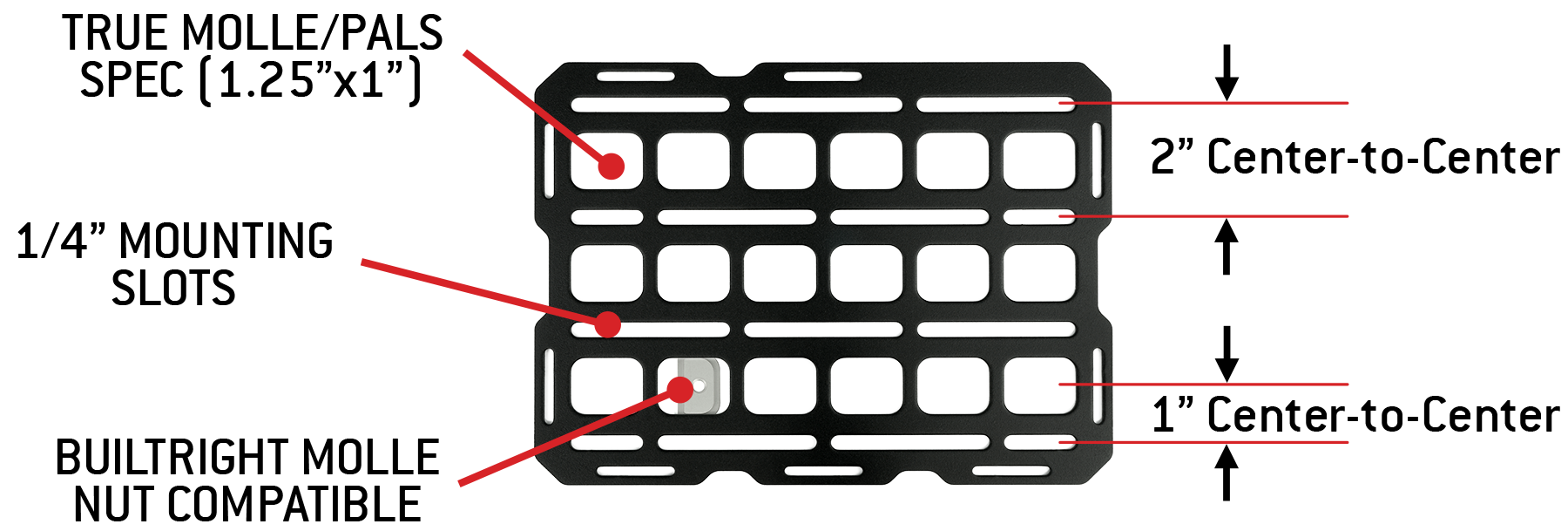
At the core of that system is something called PALS (Pouch Attachment Ladder System). That’s the grid - the actual structure - built around consistent spacing and sizing so gear can attach properly.
Here’s the key distinction most people miss:
PALS is the pattern (the grid itself)
MOLLE is the gear that attaches to it
If a panel doesn’t follow that standard spacing, it’s not truly MOLLE-compatible - no matter what the marketing says. Confused as to why they're called MOLLE panels and not PALS panels?
After its military origins, MOLLE made its way into the civilian world. Outdoor gear, overlanding setups, emergency kits - it spread quickly because it works.
But somewhere along the way, “MOLLE Compatible” became just "MOLLE"....which then became shorthand for “anything with holes in it.”
Laser-cut shapes. Decorative patterns. Random slot layouts.
Plenty of products look aggressive or tactical, but don’t actually function within the MOLLE ecosystem. And when that happens, compatibility goes out the window.
That’s where frustration starts - when your gear doesn’t mount the way it should.

Back in 2016, BuiltRight Industries approached the idea differently.
Instead of just copying the look of MOLLE, the goal was to build something that actually worked - and worked better in a truck environment.
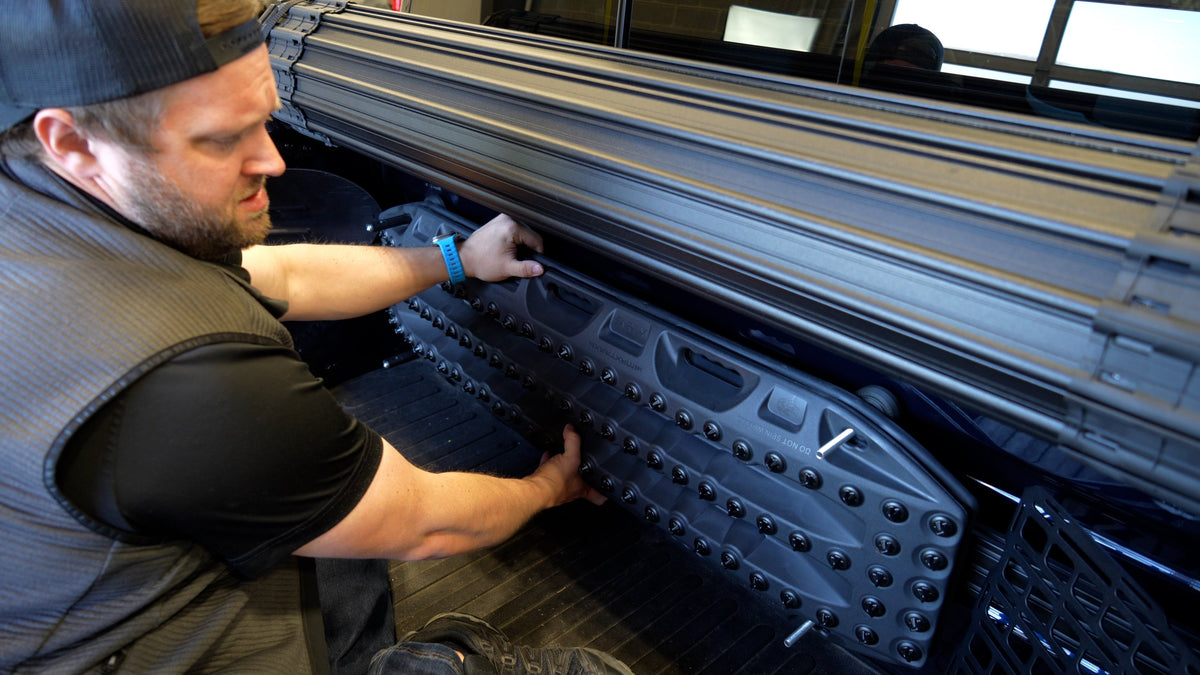
The result was a MOLLE-compatible panel system designed specifically for truck beds, built around real-world use and real-world constraints.
It started with a simple observation: wasted space.
Open a truck bed and you’ve got vertical real estate above the wheel wells that typically goes unused. That space became the foundation for a modular system that could actually organize gear without sacrificing bed functionality.
Here’s where things evolve.
Traditional PALS grids are great for soft goods - pouches, straps, lightweight gear. But trucks demand more than that. Tools, recovery gear, mounts, brackets - heavier, more rigid equipment.
That’s where BuiltRight’s patented “block and slot” pattern comes in.
Initially, our first bedside rack system was just a series of slots with no larger cutouts, similar to our dash mount patterns. Matt looked at it and it wasnt quite right. It was visually overwhelming and there really wasnt a need for 1000 different slots on a single panel. By combining standard MOLLE-compatible cutouts and spacing with horizontal slots, the system opens up far more mounting options. Clamps, hard mounts, brackets - things that traditional MOLLE struggles with become easy to integrate.
It’s not about replacing MOLLE. It’s about expanding what it can do.

At a glance, a panel is a panel.
But once you start using it, the differences show up fast.
A true MOLLE-compatible system gives you:
Predictable, repeatable mounting
Compatibility with existing gear
A modular setup that can evolve over time
A “MOLLE-style” panel? That’s where you start running into limitations.
Gear doesn’t fit right. Mounting points don’t line up. You’re forced to adapt around the product instead of the product adapting to you.

Not everything labeled MOLLE actually is.
And in a category built around modularity and compatibility, that distinction matters more than ever.
At BuiltRight, the goal has never been to follow trends - it’s been to build systems that actually work. Systems that respect the original MOLLE standard, while pushing it forward to meet the demands of modern trucks.
Because at the end of the day, this isn’t about buzzwords.
It’s about building something that works when you need it to.
The Right Tire Changes Everything: Choosing the Best Truck Tires for Your Build
Whats a Quick Fist Clamp?