

Estimated Ship Date
A.....blog about mosquitoes? From a company that does truck organization?
Yes.
Not because I suddenly became an entomologist. Not because I'm launching a pest control company. And definitely not because I enjoy talking about them.
The reason is much simpler, I'm currently losing a war.
For the last week, my house has been under siege by what appears to be a highly organized and exceptionally motivated mosquito task force. Every evening becomes a game of "where did THAT one come from?" followed by increasingly aggressive pursuits through hallways armed with whatever happens to be within reach. Winter was long, and summer came immediately after. It went from 30's and 40's to 80's in a couple days here in northern Minnesota this year. That means there was no gradual hatch, it just happened, all at once.
The first night we had 4 or 5 buzzing around our heads while we were sleeping. Annoying, but maybe they just got in as we came and went. Walked out that morning, there was 50-100 in my house. How? No idea, and couldn't investigate in the moment, just had to get to killing.  (this was about 15 minutes having my coffee in my house.)
Fly swatter? Sure.
Paper towel roll? Effective enough.
Vacuum cleaner? Difficult, but satisfying if successful.
My eventual tool of choice was my daughters 14" diameter Unicorn Squishmallow. I could whip that thing at lightspeed and smack them off the walls with no damage.
At one point, I became so consumed by the problem that I jokingly told the team I was going to write an enraged blog post about mosquito prevention.
The response was immediate.
"Maybe leave out the rage."
"Also... that's actually not a terrible topic for the overlanding crowd."
And honestly, they had a point.
While nobody wants mosquitoes in their house, the reality is that overlanders, campers, hunters, off-road enthusiasts, and anyone who spends meaningful time outdoors have been fighting this battle for decades. The difference is that instead of a rogue mosquito appearing in your kitchen, you're dealing with entire squadrons of them descending on camp the moment the sun starts to set.
So in the interest of channeling my frustration into something useful, let's talk about mosquitoes, why they seem to love every great campsite you've ever found, and how to keep them from turning your next adventure into an endurance test.
Have you ever noticed that the most scenic campsites also seem to have the most mosquitoes?
Beautiful lakeside clearing?
Mosquitoes.
Remote river crossing?
Mosquitoes.
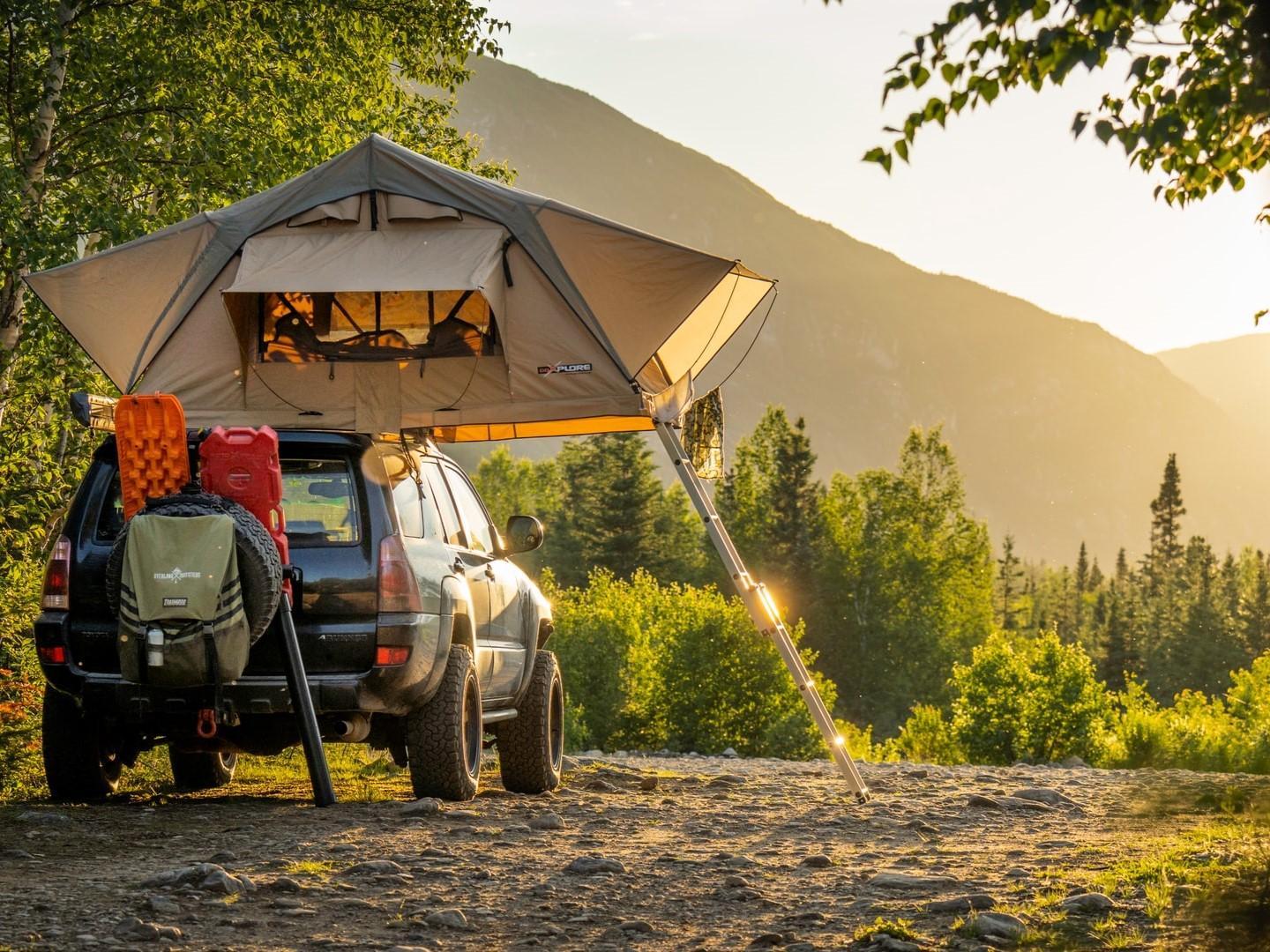
Peaceful wooded campsite with incredible sunset views?
Congratulations. You've booked a five-star mosquito resort.
There's a reason for this.
Mosquitoes need standing water to reproduce. They thrive in humid environments, shaded areas, marshes, slow-moving streams, ponds, and lake edges. Unfortunately, many of those same conditions also make for incredible camping destinations.
The secluded forest trail you spent hours finding? Perfect mosquito habitat.
That pristine overlanding route winding through wetlands and river valleys? Mosquito heaven.
The result is a simple reality every experienced camper eventually learns:
If the scenery is amazing, insect management should probably be part of your packing list.
Most people think mosquito control begins at camp.
In reality, it starts before the trip even begins.
A little preparation goes a long way toward making camp life more enjoyable.
Long sleeves, lightweight pants, and proper bug repellents Like Permethrin ( long term clothes treatment), Picaridin (usually a long lasting lotion) and good ol DEET are still some of the most effective tools available. I have it on good authority from a Forest Service Ranger that Picaridin lotion and Permethrin treated clothes is about as good as you can get. Modern outdoor clothing has become surprisingly comfortable even in warm weather, and covering exposed skin dramatically reduces the number of opportunities mosquitoes have to make your life miserable.
Many experienced overlanders treat clothing with permethrin before extended trips. When used properly according to manufacturer instructions, it creates an additional layer of protection that lasts through multiple outings, and washings.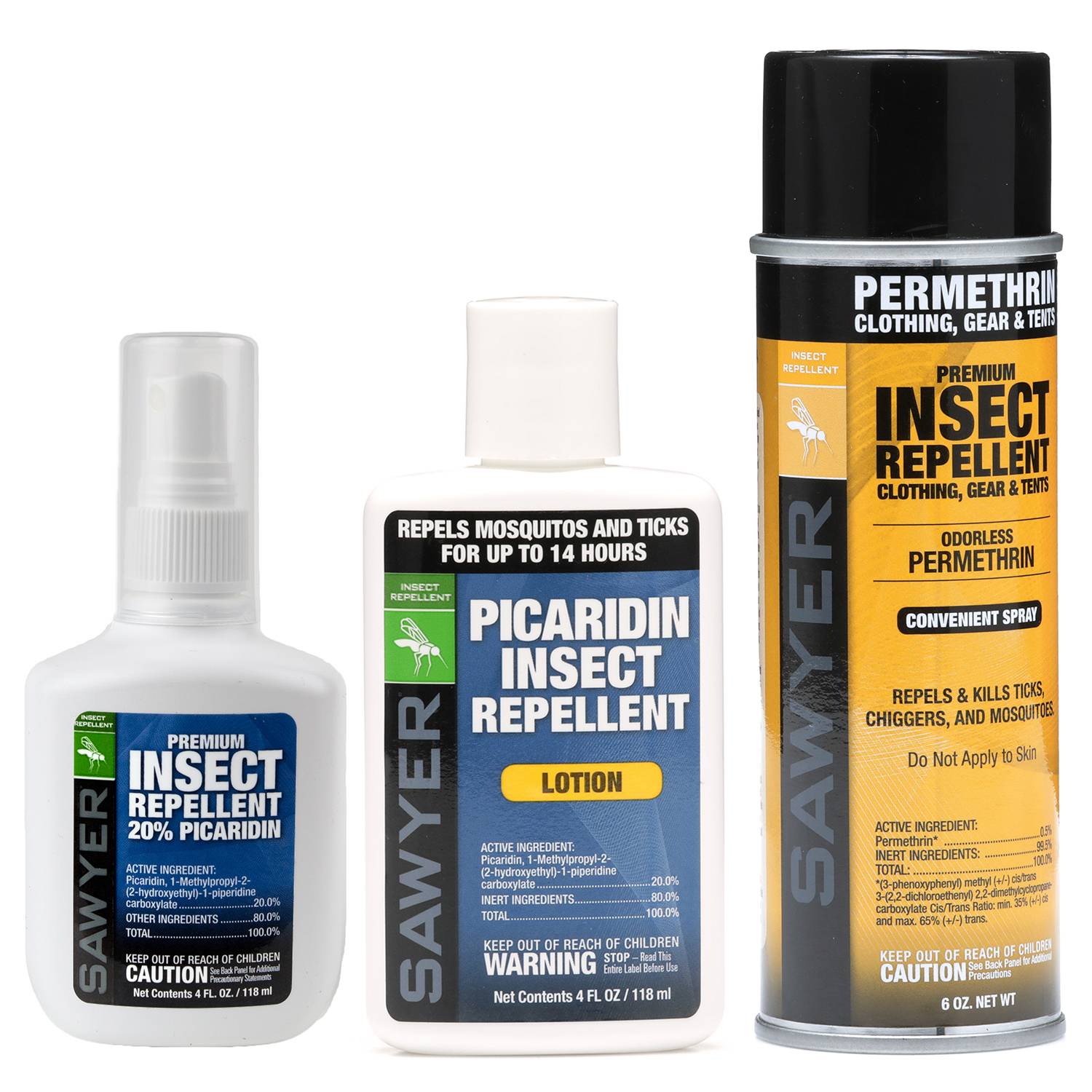
Of course, organization matters too.
Nothing is more frustrating than realizing your bug spray is buried beneath recovery gear, camp kitchen supplies, spare parts, and three days' worth of snacks.
This is where vehicle organization starts paying dividends in ways you may not have considered.
The easier it is to access the gear you need, the more likely you'll actually use it.
If your mosquito repellent lives in a dedicated pouch, seatback panel, bedside rack bag, or gear compartment, you'll grab it when you arrive at camp.
If it's somewhere underneath thirty pounds of equipment and a cooler, you'll probably convince yourself you'll "deal with it later."
You already know how that story ends.
Sometimes the best mosquito prevention isn't a product at all.
It's where you park.
When possible, avoid setting up directly next to standing water. A campsite with a little elevation and a steady breeze can dramatically reduce mosquito activity.
Mosquitoes aren't particularly strong flyers. Even modest airflow makes their job significantly harder.
This is why campsites positioned on ridgelines, open clearings, or exposed areas often feel far more comfortable than heavily shaded locations tucked against water.
You may sacrifice a little shade.
You may gain the ability to sit outside without donating a pint of blood.
It's a worthwhile trade.
One thing experienced overlanders learn quickly is that camp comfort isn't about luxury.
It's about reducing friction.
The less time you spend digging through gear, rearranging equipment, and solving preventable problems, the more time you spend enjoying the trip.
Mosquitoes fit directly into this category.
A screened shelter, bug net, or enclosed awning room can completely transform an evening at camp. What would otherwise become a frantic race against sunset becomes a comfortable place to cook dinner, relax, and enjoy the outdoors.
Likewise, small battery-powered fans can be surprisingly effective around camp seating areas. Remember, mosquitoes struggle in moving air.
The fan doesn't need to create a hurricane, it just needs to make their approach a little more difficult.
For generations, campers have used campfires as a natural mosquito deterrent.
There's some truth to it.
Smoke can help discourage insects from lingering nearby, particularly when wind conditions cooperate.
That said, relying solely on a campfire is a little like relying on a screen door to stop a determined bear.
Think of smoke as one layer of a broader strategy rather than the entire solution.
At BuiltRight, we're obviously big believers in organization.
Not because it looks cool in photos, or earns points on social media, but because organized gear makes outdoor adventures easier.
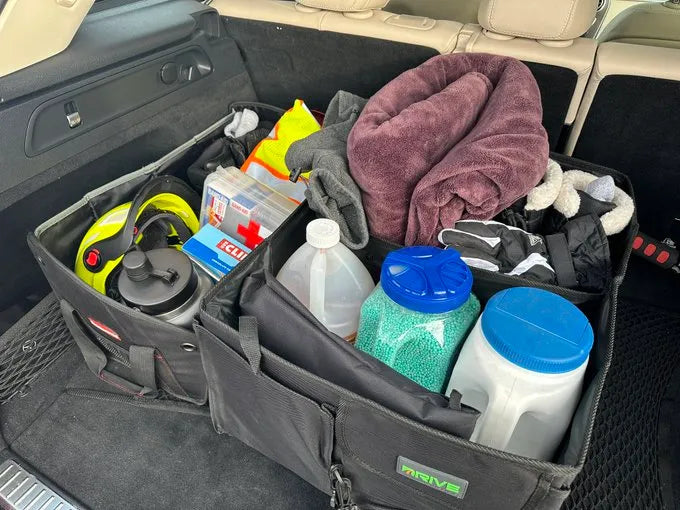
When bug spray, first aid supplies, headlamps, batteries, sunscreen, and other frequently used items have designated locations, they're available exactly when you need them. No searching or unloading half the vehicle. No wondering which tote you packed them in.
The same organizational systems that make recovery gear accessible during an emergency also make everyday camp life dramatically more enjoyable. And if you've ever spent ten minutes searching for insect repellent while mosquitoes are actively conducting landing operations on every exposed inch of skin, you understand exactly why that matters.
Here's the unfortunate truth:
No mosquito prevention strategy is perfect, and if you spend enough time outdoors, a mosquito is eventually going to find you - probably a few of them. The goal isn't to achieve total victory over every buzzing bloodsucker in the woods; it's to keep them from becoming the main character of your trip. You didn't head out overlanding, camping, or exploring back roads just to spend the weekend swatting bugs. You came for the trails, the scenery, the campfire conversations, and the memories made with friends and family. Mosquitoes may be an unavoidable part of outdoor adventure, but with a little preparation, they don't have to be the thing you remember most when the trip is over.
As I write this, there's a very real chance another mosquito (or 10) is lurking somewhere in my house, waiting for the perfect opportunity to remind me who's really in charge. The battle is ongoing, and I wouldn't describe the outcome as settled just yet. What this whole experience has reinforced, though, is that whether you're dealing with mosquitoes at home, on the trail, or around camp, preparation and organization solve far more problems than frustration ever will.
And if all else fails? At least you'll be waging that battle from a well-organized vehicle, which is more than most mosquitoes can say.



After 10 Years, We Finally Bought a Ram
How to Build a RETRAX Compatible Bedside MOLLE Rack System for Your Ford Truck