

Estimated Ship Date
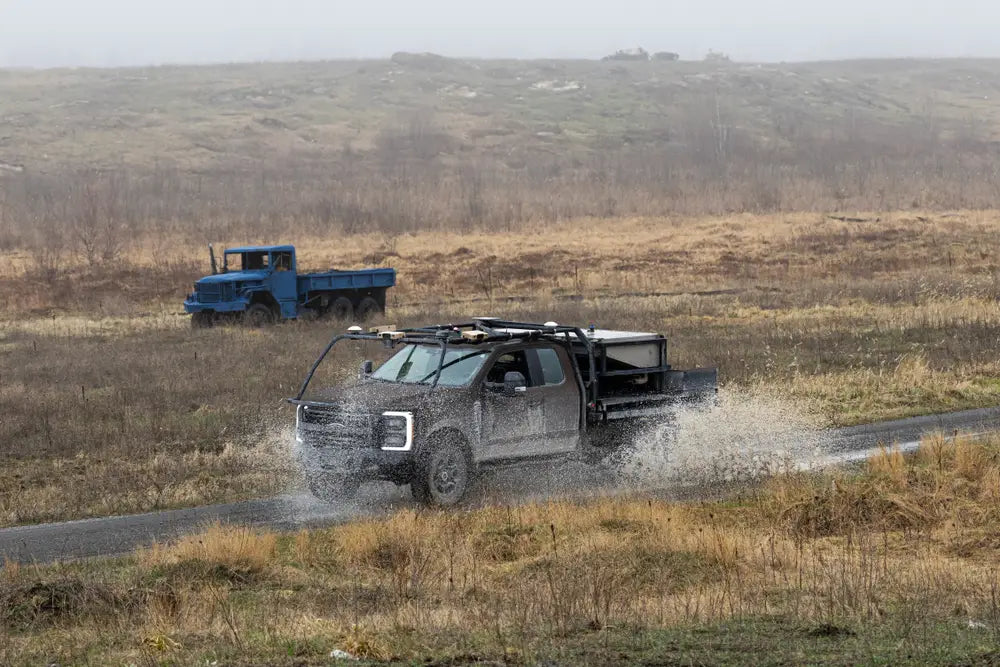
For decades, military vehicle development has followed a familiar formula: design a purpose-built platform, spend years developing it, and hope it remains relevant long enough to justify the investment. The Army's latest autonomous vehicle program takes a very different approach. Rather than building a brand-new robotic combat vehicle from the ground up, it's evaluating autonomous Ford F-250 Super Duty pickups equipped with self-driving technology from Forterra.
At first glance, that might not sound particularly exciting. But it may represent one of the most significant shifts in military vehicle development in years.
The Army's XVIII Airborne Corps is testing four autonomous F-250s for dangerous missions such as route clearance, breaching operations, and logistics support. These are exactly the kinds of jobs that often expose soldiers to mines, improvised explosive devices, and enemy observation long before the main force arrives.
By sending an unmanned truck instead of a soldier, the Army can reduce unnecessary risk while still accomplishing the mission. Although the autonomy is what makes these vehicles possible, the real story is the platform itself. Instead of relying on a highly specialized military vehicle with a unique supply chain, the Army is experimenting with one of the most common heavy-duty pickups on the road today.
That decision carries some major advantages.
Commercial trucks are built in huge numbers, which means replacement parts, service knowledge, and manufacturing capacity already exist. Maintenance is simpler, repairs are faster, and costs are significantly lower than developing and supporting an entirely new military vehicle.
The defense industry has been moving in this direction for several years. Rather than designing every component from scratch, military programs are increasingly adopting proven commercial hardware and combining it with mission-specific software and equipment. Doing so shortens development timelines, lowers costs, and allows new capabilities to reach the field much faster.
The F-250 itself isn't what makes this program noteworthy. Plenty of trucks can carry equipment over rough terrain. What separates this one is the autonomy software that allows it to navigate difficult environments with minimal human involvement.
Modern military vehicles are becoming increasingly software-defined. While horsepower, payload, and durability still matter, the real advantage comes from the ability to operate alongside drones, sensors, communications networks, and other autonomous systems without requiring a soldier behind the wheel.
Forterra says its system can continue operating with minimal communications by following preplanned routes and making its own driving decisions. That's an important capability as militaries place greater emphasis on operating in environments where GPS signals, radio communications, and network connectivity cannot be relied upon.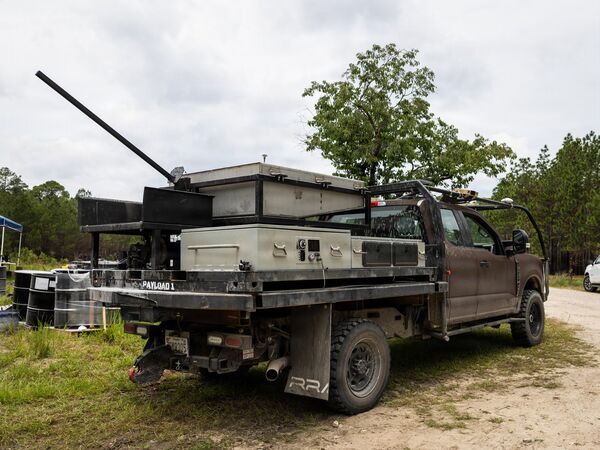
The war in Ukraine has accelerated interest in autonomous ground vehicles more than almost any conflict in recent history. Both sides have rapidly expanded the use of unmanned systems for logistics, reconnaissance, engineering work, and casualty evacuation.
Rather than replacing infantry, these vehicles are taking over some of the most dangerous support missions, allowing soldiers to focus on tasks that still require human judgment while reducing unnecessary exposure to enemy fire and explosive threats. That experience has reinforced the value of autonomous ground systems and has influenced military planners well beyond Eastern Europe.
The autonomous F-250 is unlikely to remain a one-off experiment. As self-driving technology matures, commercial pickups are becoming increasingly attractive platforms for military applications because they already offer excellent payload capacity, proven off-road performance, and a massive support network.
Whether they're clearing routes, transporting supplies, supporting engineers, or responding to disasters, commercially available trucks provide a level of flexibility that purpose-built vehicles often can't match at the same price point.
For the Army, the goal doesn't appear to be replacing every military vehicle with a pickup truck. Instead, it's about identifying missions where commercial platforms paired with advanced autonomy can deliver the same capability more quickly, more affordably, and with less risk to soldiers.
Autonomous vehicles tend to capture attention because they feel futuristic, but the more meaningful story is how ordinary the platform has become. Instead of investing exclusively in exotic robotic vehicles, the Army is demonstrating that a familiar heavy-duty pickup can become an effective military asset when paired with the right software.
That approach reflects a broader shift taking place across the defense industry. Increasingly, capability isn't defined by the vehicle itself, but by the technology running on it. The truck may still wear a Blue Oval on the grille, but it's the autonomy behind the wheel that could shape the next generation of military mobility.
BuiltRight Industries is Heading to TORR Durhamtown
Why Trucks Continue to Win While the Rest of the Auto Industry Struggles