

Estimated Ship Date
Fall is the easy part of the year to prepare for. The temperatures are still manageable, the roads are generally clear, and a minor problem on the side of the road is mostly an inconvenience.
Winter is different.
A dead battery, flat tire, empty fuel tank, or unexpected slide off the road can become a much bigger problem once temperatures drop and daylight disappears before the workday is over. Even if you don't live somewhere that gets buried in snow, winter weather has a way of turning a routine drive into a situation you didn't plan for.
The good news is that being prepared doesn't require turning your truck into a mobile survival shelter. A relatively small collection of tools, recovery gear, emergency supplies, and cold-weather essentials can cover most of the situations you're likely to encounter.
The key is having that gear with you before you need it, and knowing where it is when you do.
Before adding anything new to your truck, fall is a good time to go through the basics.
Check your battery, tires, fluids, lights, wipers, heater, and defroster. If your battery is several years old, cold weather is a good excuse to have it tested. Batteries lose some of their effective capacity as temperatures drop, while your engine requires more power to start in the cold.
Tires deserve just as much attention. Check the tread depth, look for uneven wear or damage, and make sure they're inflated properly. Remember that tire pressure drops as temperatures fall, so a tire that was properly inflated in August may be low by the time November rolls around.
Make sure your spare tire is actually usable, too. Check its pressure and make sure you have everything required to change a tire. It's surprisingly common to discover that the spare is flat, the jack is missing a piece, or the lug wrench doesn't fit until you're already sitting on the side of the road.
The same goes for your windshield washer fluid. Keep a winter-rated fluid in the truck once temperatures start approaching freezing. Being able to see clearly is one of the simplest and most important pieces of winter preparedness.
There's nothing wrong with keeping a small first-aid kit in the truck year-round, but fall is a good time to make sure it actually contains useful supplies.
At a minimum, consider keeping bandages, gauze, medical tape, antiseptic wipes, gloves, pain reliever, and other basic first-aid supplies. You don't need a full trauma bag for a normal daily driver, but you should have enough to deal with minor injuries until you can get help.
A flashlight is another essential. Ideally, keep at least one good flashlight in the vehicle along with spare batteries, or use a rechargeable light and make sure it's charged before heading out.
A headlamp is even better when you're working on a vehicle. Having both hands free while changing a tire, connecting jumper cables, or looking underneath the truck is a lot more useful than holding a flashlight between your teeth.
Add a few chemical hand warmers, too. They're inexpensive, take up almost no space, and can make a miserable situation much more manageable.
Winter is when recovery gear starts earning its keep.
Even a good four-wheel-drive truck can end up stuck. Four-wheel drive helps you move through difficult conditions, but it doesn't make you immune to losing traction. Ice, deep snow, ditches, soft shoulders, and poorly maintained roads can get even the most capable truck into trouble.
A basic recovery setup should include a quality recovery strap or kinetic rope, appropriate shackles, and gloves. If your truck has recovery points, know where they are and make sure you understand how to use them.
A compact shovel is another piece of gear that can be extremely useful. You don't necessarily need a giant snow shovel taking up the entire bed. A sturdy compact shovel can be enough to clear snow from around the tires or dig out a truck that's high-centered.
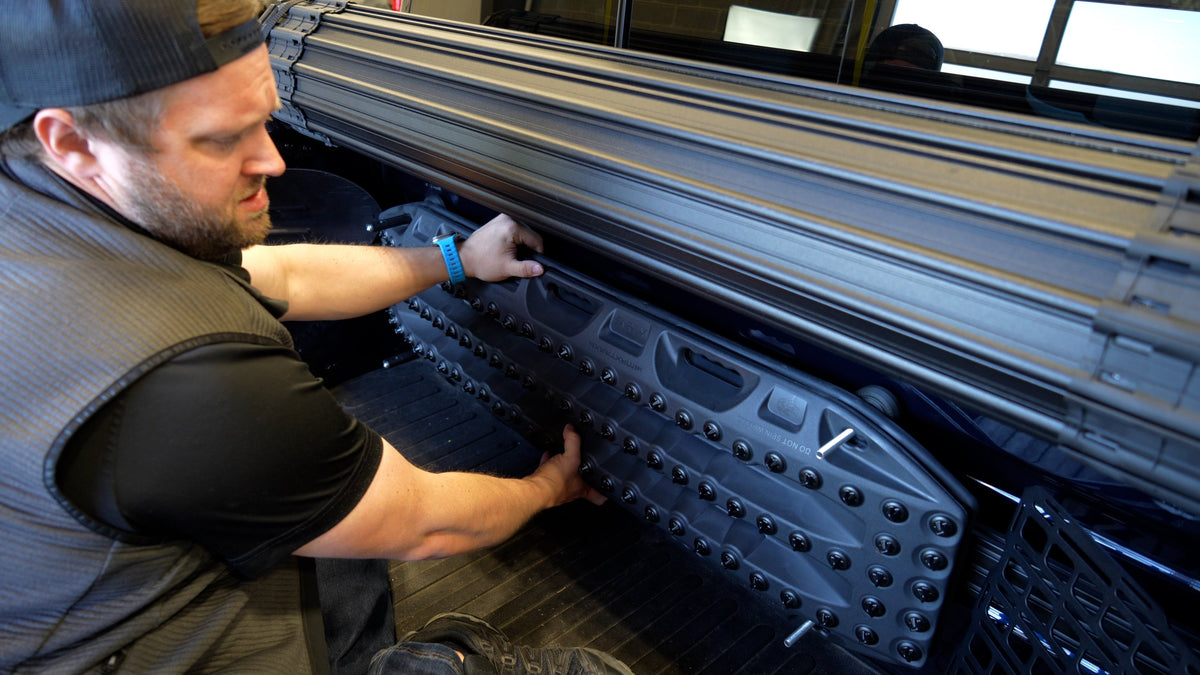
Traction boards can also be useful when you need to create a little extra traction underneath the tires. They're particularly handy because they don't require another vehicle, and they can double as a way to bridge small gaps or obstacles in some situations.
The important thing is to keep recovery equipment accessible. If it's buried underneath everything else in the bed, it's not much use when your truck is stuck.
One of the biggest mistakes people make with emergency gear is assuming someone else will be there to help.
Sometimes that's true. Sometimes it isn't.
A portable air compressor is one of the most useful pieces of gear you can carry year-round. It can get you back on the road after airing down for traction, compensate for a slow leak, or simply top off a tire that's low because of the temperature.
A tire plug kit is also worth carrying if you're comfortable using one. It won't fix every tire problem, but a simple puncture doesn't necessarily have to end your trip.
A jump pack is another excellent addition. Modern lithium jump starters are small enough to live in a glove box or storage compartment, and they eliminate the need to find another vehicle when your battery decides not to cooperate.
Just remember to check the charge periodically. An emergency jump pack that's been sitting in the truck for two years without being charged isn't much of an emergency solution.
The goal isn't necessarily to survive for days in your truck. It's to be comfortable and safe long enough for help to arrive.
That means having some basic cold-weather supplies.
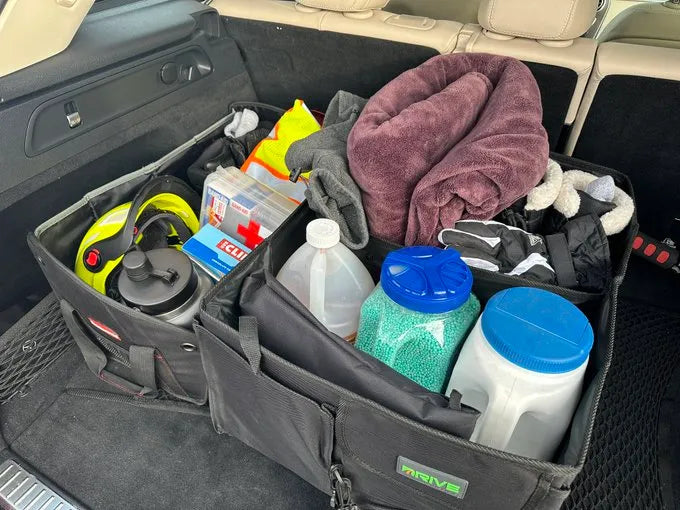
Keep a warm blanket or sleeping bag in the vehicle. An old wool blanket works, too. Add an extra hat, gloves, and pair of socks. If you work outdoors or spend time away from town, consider keeping a complete change of warm clothing in the truck.
This is especially important because clothing that gets wet can become a serious problem in cold weather. A dry pair of socks can be worth more than a lot of expensive emergency equipment.
Water and shelf-stable snacks are also worth keeping on hand. Protein bars, granola bars, trail mix, and other foods that tolerate temperature swings are easy to store and don't require preparation.
Avoid storing anything that will create a mess when it freezes and expands.
If something goes wrong on the side of the road, being seen is incredibly important.
Keep a reflective vest, warning triangles, or road flares in your vehicle. A flashlight with a flashing or strobe function can also help make your position more obvious at night.
If you're changing a tire or working around the vehicle after dark, visibility becomes even more important. Don't assume that because you can see approaching traffic, approaching traffic can see you.
This is one area where a few inexpensive pieces of equipment can make a significant difference.
Most of us already carry a powerful communication device everywhere we go. The problem is that it only helps if it has power and a signal.
Keep a charging cable in the vehicle and consider carrying a dedicated power bank. Most portable jump starters also double as a phone charger/ battery bank. Boom, two birds, one stone. If you spend significant time in areas with limited cellular coverage, think about what your communication plan looks like if your phone can't connect.
It's also worth downloading important maps for offline use. Rural areas can have surprisingly large gaps in cellular coverage, and winter isn't the time to discover that the route you were following depends on a connection you don't have.
For longer trips into remote areas, additional emergency communication equipment may be worth considering.
Some of the most useful winter items are also the least exciting.
A roll of duct tape can solve an impressive number of temporary problems. Zip ties are similarly useful. Work gloves protect your hands while dealing with roadside repairs, and a basic tool kit can cover many minor problems.
Keep an ice scraper and snow brush in the cab, not buried underneath gear in the bed.
A small bag of sand, kitty litter, or another traction material can help provide additional grip when you're dealing with a slippery surface. A windshield cover can make morning cleanup easier, too.
Paper towels, shop rags, trash bags, and a few heavy-duty contractor bags are also worth keeping around. None of them are particularly glamorous, but you'll find uses for them.
This is where having a truck with a well-organized storage system becomes more than just a convenience.
Emergency gear has a bad habit of getting thrown into a bed, toolbox, or storage bin until nobody remembers what's actually in there. When you need something in the middle of a snowstorm, digging through three layers of gear isn't ideal.
The goal should be to give important equipment a dedicated home.
Keep your recovery gear together. Keep your tire and roadside repair equipment together. Keep your first-aid and emergency supplies somewhere you can reach them from the cab. Keep frequently used equipment secured so it isn't sliding around in the bed.
A MOLLE panel or other modular storage system can make this particularly easy. Instead of throwing equipment into a pile, you can give everything a specific location and keep the items you use most often immediately accessible.
That organization matters even more in winter. Cold temperatures, snow, darkness, and gloves aren't exactly ideal conditions for digging through a pile of equipment looking for a flashlight.
It's easy to go overboard with vehicle emergency gear.
You don't need to carry everything you might possibly need in every imaginable situation. The goal is to cover the problems you're realistically likely to encounter while keeping the system compact enough that you'll actually leave it in the truck.
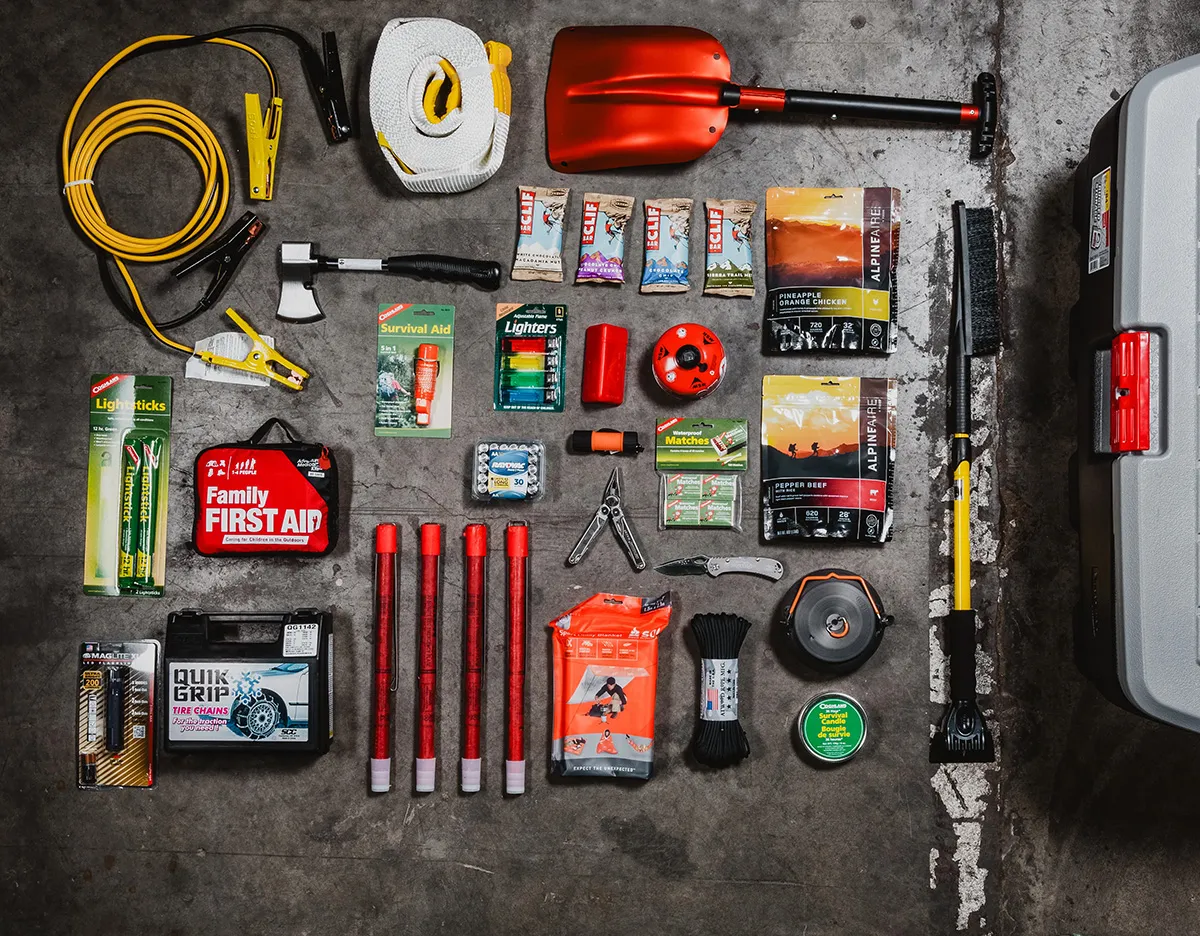
For most drivers, that means starting with the essentials:
A jump pack.
A flashlight or headlamp.
A tire inflator and tire repair kit.
A jack and properly inflated spare.
Recovery strap and shackles.
A shovel.
Traction equipment.
First-aid supplies.
Warm clothing and blankets.
Food and water.
A phone charger or power bank.
Basic tools.
Reflective gear.
Ice scraper and snow brush.
From there, build around your specific use case. Someone commuting 20 minutes through town needs a different setup than someone driving 100 miles through rural Minnesota in the middle of January.
The worst time to start thinking about winter preparedness is when you're already sitting in a ditch.
Fall gives you a perfect opportunity to look at your vehicle, figure out what you already have, identify the gaps, and organize everything before you need it.
Take an afternoon and go through your truck. Test the lights. Check the spare. Charge the jump pack. Inspect the recovery gear. Replace old batteries. Throw a blanket and extra clothes in the cab. Make sure the shovel isn't buried underneath everything else.
Then take a look at how everything is stored.
The best emergency gear is the gear you can find, reach, and use when conditions are at their worst.
Winter driving is unpredictable, but being prepared doesn't have to be complicated. A little planning in the fall can turn a potentially serious roadside problem into nothing more than an inconvenient stop before you're back on your way.

Why Traction Boards Are Worth Carrying This Winter