

Estimated Ship Date
There’s a moment you notice it - usually the first time your truck doesn’t quite do what you expected, or what you needed. Maybe it’s a muddy job site that turns into a slip-and-slide, or a long highway drive where road noise slowly wears you down. Tires are one of the most overlooked upgrades on a truck, but they’re also one of the most transformative.
At BuiltRight, we spend a lot of time thinking about how trucks are actually used. Not just how they look in a parking lot, but how they perform when they’re loaded down, pushed hard, or relied on daily. Tires sit right at the center of that equation. They’re the only part of your truck that actually touches the ground - and choosing the right type can completely change how your truck behaves.
If you’ve ever found yourself deciding between highway tires, all-season options, all-terrain (AT), or mud-terrain (MT), you’re not alone. Let’s break it down in a way that actually makes sense for real-world use.
Highway tires are what most trucks come with from the factory, and for good reason. They’re designed for smooth pavement, predictable handling, and long tread life. If your truck spends most of its time commuting, road-tripping, or hauling on paved roads, this is where highway tires shine.
The tread pattern is tight and consistent, which helps reduce rolling resistance. That translates directly into better fuel economy and quieter driving. On a long stretch of interstate, they’re hard to beat.
But that same design is also their biggest limitation. Once you leave pavement, especially in loose dirt, gravel, or mud, highway tires struggle to find traction. The shallow tread doesn’t have much bite, and they can clog easily in muddy or snowy conditions.
For a truck that’s primarily a daily driver with occasional light-duty use, highway tires make sense. But if your weekends start to look a little more adventurous, you’ll start to feel their limits pretty quickly.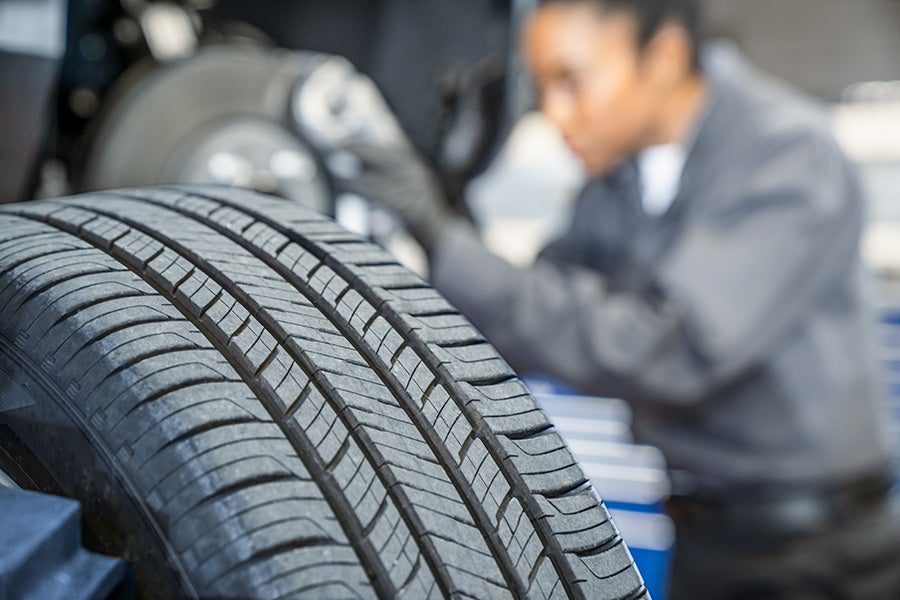
All-season tires aim to do a little bit of everything, but theyre not the best at anything. For many truck owners, that’s exactly what they need. They’re designed to handle a variety of conditions - dry pavement, rain, and even light snow.
Compared to highway tires, you’ll typically see slightly more aggressive tread patterns and improved siping, which helps with wet and winter traction. They’re still comfortable and relatively quiet, but they add a layer of versatility that highway tires don’t offer.
That said, “jack of all trades” also means “master of none.” All-season tires won’t match the fuel efficiency and quiet ride of highway tires, and they won’t come close to the off-road capability of an all-terrain or mud-terrain tire.
If your truck sees changing weather and occasional unpaved roads, but nothing too extreme, all-season tires can be a solid compromise. They’re especially popular in regions where conditions shift throughout the year.
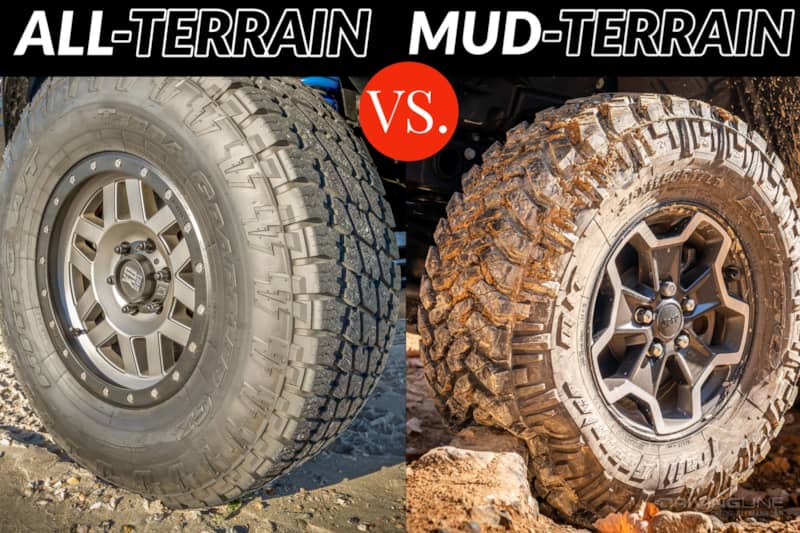
All-terrain tires are where things start to get interesting. This is the category that most truck enthusiasts eventually land in, and for good reason. AT tires are designed to handle both on-road and off-road conditions without forcing you to sacrifice too much in either direction.
The tread pattern is more open and aggressive than highway or all-season tires, which gives them the ability to bite into loose surfaces like dirt, gravel, and sand. At the same time, modern AT tires have come a long way in terms of ride quality and noise. Many are surprisingly comfortable on the highway.
For trucks that pull double duty - commuting during the week and exploring trails or job sites on the weekend - AT tires are often the sweet spot. They offer durability, versatility, and confidence in a wide range of conditions.
There are trade-offs, of course. You’ll typically see a slight hit to fuel economy, and they can be louder than highway-focused options. But for most drivers, the added capability more than makes up for it.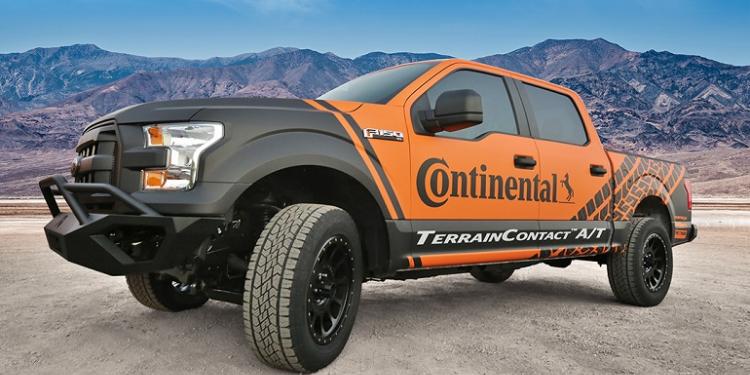
Mud-terrain tires are built for one thing - traction in the most demanding conditions. Deep mud, loose sand, rocky terrain - this is where MT tires excel.
The tread blocks are large, widely spaced, and designed to self-clean, meaning they shed mud and debris instead of packing it in. The sidewalls are often reinforced for added durability, which is critical when you’re navigating sharp rocks or uneven terrain.
On the trail, MT tires can feel unstoppable. But on pavement, they come with noticeable compromises. Road noise is (horrible) significantly higher, ride quality can be harsher, and fuel economy usually takes a hit. Wet pavement performance can also be....... less predictable compared to other tire types.
MT tires make the most sense for trucks that are built with off-road performance as the priority. If your truck spends most if not all of its time in the dirt and almost none on asphalt, they’re hard to beat. For daily driving, though, they can feel like overkill and quite unpleasant.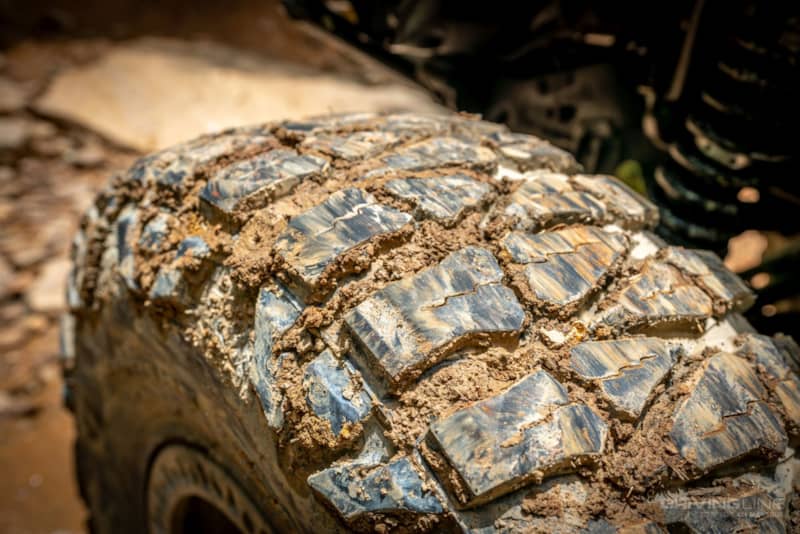
The biggest mistake people make when choosing truck tires is picking based on appearance rather than use. Aggressive tread looks great, but if it doesn’t match how you drive, it can end up making your truck less enjoyable day to day.
Think about where your truck spends most of its time. Is it highway miles with the occasional gravel road? A mix of commuting and weekend trails? Or is it regularly seeing mud, rocks, and rough terrain?
There’s no one-size-fits-all answer, but there is a right answer for your specific use case.
At BuiltRight, we approach truck builds the same way. Whether it’s a seatback MOLLE panel, a bed system, or a simple mounting solution, the goal is always the same - make your truck work better for how you actually use it.
Tires are no different. The right choice doesn’t just improve performance - it makes every mile, every job, and every trip feel more dialed in.
Truck tires aren’t just another spec on a build sheet. They’re a foundational part of how your truck performs, feels, and handles the real world.
Highway tires deliver comfort and efficiency. All-season tires add versatility. All-terrain tires strike a balance between daily usability and off-road capability. Mud-terrain tires go all-in on traction when the terrain gets serious.
The key is choosing with intention.
Because when your truck is set up with purpose - from the tires on the ground to the gear in the bed - everything just works better.
And that’s what we’re all about.
BuiltRight Industries Hits the Road This Weekend
Most “MOLLE” Panels....Arent