

Estimated Ship Date
Electric pickups haven't exactly gone according to plan.
A few years ago, the industry seemed convinced that truck buyers would quickly move from gas-powered pickups into electric ones. Instead, we got EV trucks with eye-watering price tags, manufacturers scaling back ambitious production plans, and plenty of buyers deciding their current truck works just fine.
Ford's latest answer isn't another six-figure electric super truck. It's going in almost the exact opposite direction.
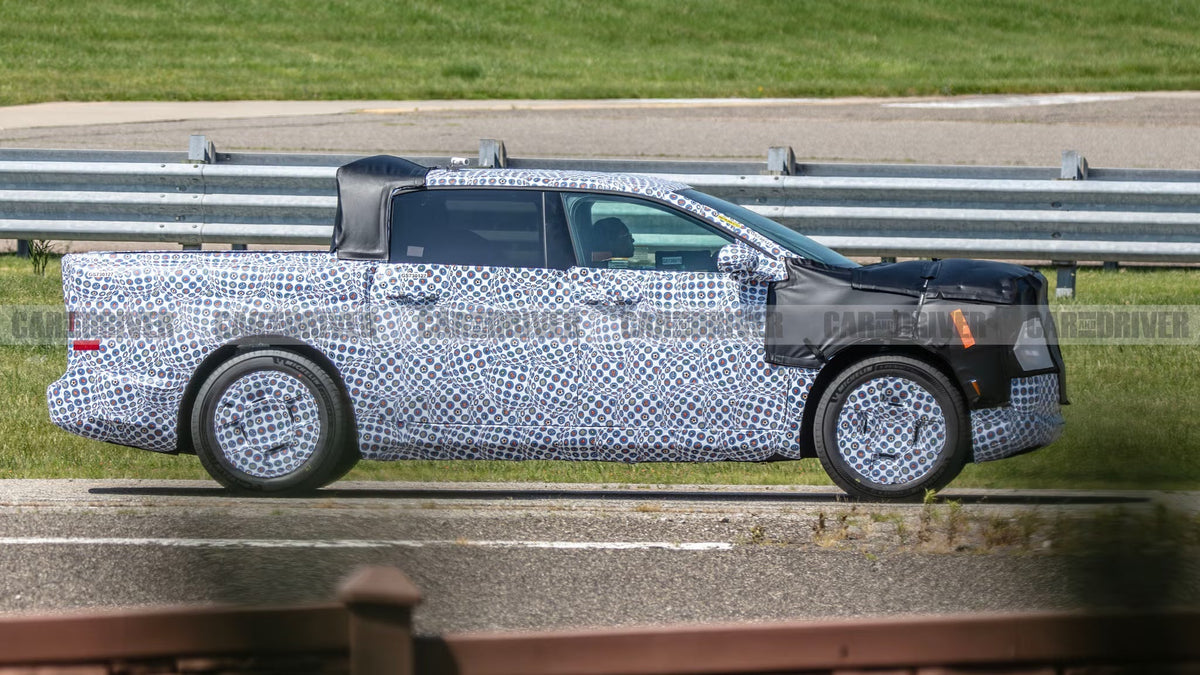
Meet the Ford Fathom, an upcoming midsize electric pickup with a "starting MSRP" of just $28,350.
And that price might be the most interesting thing about it.
The Fathom will be the first vehicle built on Ford's new Universal Electric Vehicle Platform, which the company has developed specifically around making smaller and more affordable EVs. Ford plans to begin taking preorders in early 2027, with the truck arriving later that year.
Instead of trying to turn an F-150 into an EV and maintaining everything buyers expect from a full-size pickup, Ford appears to be starting with a simpler question:
How do you build an electric truck that normal people can actually afford?
At $28,350 before destination charges, the standard-range Fathom will land in roughly the same territory as many compact gas-powered vehicles. Ford says it will seat five and actually offer more passenger volume than a Toyota RAV4.
That's a much different proposition than asking someone to spend $60,000, $70,000 or more to experiment with an electric pickup.
This distinction is important.
The Fathom isn't being positioned as a replacement for the F-150. It's a smaller truck aimed at buyers who want the utility of a pickup without necessarily needing to tow a huge trailer or haul thousands of pounds.
In that sense, it's probably closer philosophically to the Maverick than the F-150 Lightning, but that could be exactly why it works.
There are a lot of truck owners who use their beds for bikes, camping gear, tools, lumber, hunting equipment and weekend projects but don't need the capabilities of a full-size pickup every day. The success of smaller trucks has already demonstrated that there's a market for something below the traditional half-ton.
Ford is betting that some of those buyers are ready for an electric version.
Keeping the price low doesn't appear to mean Ford is building a bare-bones work truck (cough, slate, cough).
Ford has confirmed that the Fathom will offer a large touchscreen, wireless Apple CarPlay and Android Auto, digital key functionality and bidirectional power capability. Every truck will also have the hardware necessary to support Ford's BlueCruise hands-free highway driving system.
Bidirectional power is particularly interesting in a pickup.
Being able to use the truck's battery as a mobile power source opens up obvious possibilities for jobsites, campsites, tailgating and emergency backup power.
That's one of the areas where an electric truck can provide utility that has nothing to do with saving fuel.
The Fathom isn't just another vehicle sitting on a new platform, Ford is investing heavily in changing the manufacturing process behind it.
The Louisville Assembly Plant is undergoing a roughly $2 billion transformation to build the truck, while the larger initiative represents about $5 billion in investment between vehicle and battery manufacturing.
Ford's new production system moves away from a conventional single assembly line. Instead, major sections of the vehicle are assembled along separate paths before coming together later in production.
Large castings and fewer individual components are also intended to simplify assembly.
The goal is pretty straightforward: make EVs faster and cheaper to build.
If Ford can actually accomplish that, the Fathom may be more important for what comes after it than for the truck itself. Ford has already said the Universal EV Platform is intended to support additional affordable vehicles beyond this first pickup.
This is where truck buyers have every reason to be skeptical.
We've heard attractive entry-level pricing before, only to see inexpensive trims become difficult to find while higher-spec versions fill dealer lots.
The original Maverick famously launched as a roughly $20,000 pickup. The F-150 Lightning arrived with a roughly $40,000 entry point. Neither stayed anywhere near those numbers for long.
So while $28,350 makes a fantastic headline, what matters is whether buyers can actually walk into a Ford dealer and buy a Fathom somewhere near that price.
Destination charges already push the effective starting price closer to $30,000. Options, larger batteries and higher trims will obviously push it farther.
Still, even a Fathom in the low-to-mid $30,000 range would represent something noticeably different from most of the electric trucks we've seen so far.
The first generation of electric pickups largely tried to prove that EVs could be faster, more powerful and more technologically impressive than conventional trucks.
They succeeded in a lot of those areas.
But they also became expensive.
The Fathom is taking another approach. It doesn't need to replace an F-250. It doesn't need four motors or supercar acceleration. It doesn't need to convince every traditional truck owner to give up gasoline.
It just needs to be useful, affordable and good enough that someone shopping for a Maverick, compact SUV or small pickup gives it serious consideration.
That's arguably a much more realistic way to get electric trucks into people's driveways.
There's still a lot we don't know. Ford hasn't released all of the specifications that truck buyers will care about, and questions surrounding range, payload, towing capacity, bed dimensions and real-world pricing will ultimately determine whether the Fathom is a legitimate pickup or simply an inexpensive EV shaped like one.
But the strategy behind it makes sense.
The electric truck market probably didn't need another $80,000 technological showcase.
A genuinely useful $28,000 truck?
That could be a much bigger deal.
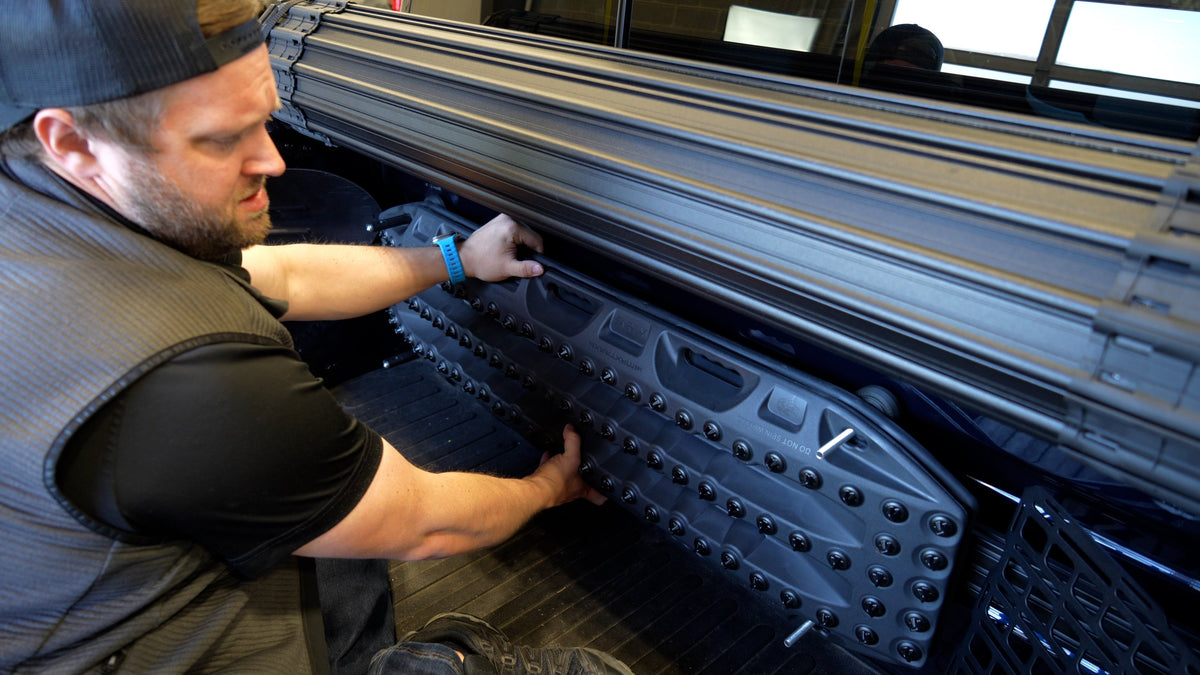

Don’t Be Afraid to Cut Your BuiltRight Panels
BuiltRight Rear Seat Release: Taking Hidden Ford Truck Storage Further