

Estimated Ship Date
A Brief Investigation Into Some of the Most Questionable Products Ever Bolted to a Vehicle
There was a time when overlanding was simple.
You packed some camping gear, threw a cooler in the truck, maybe brought a paper map, and drove somewhere that didn't have cell service.
Today, you can spend $80,000 building a truck to survive a post-apocalyptic expedition across Mongolia... and then use it to spend a weekend at a campground with flush toilets and Wi-Fi.
Somewhere along the way, things got a little weird.
We're not here to judge. At BuiltRight, we love innovative products. We spend our days designing mounting solutions, storage systems, and ways to make trucks more functional.
But every now and then a product comes along that makes us stop, stare, and ask a very important question:
Are overlanders okay?
We'll start with a recent favorite.
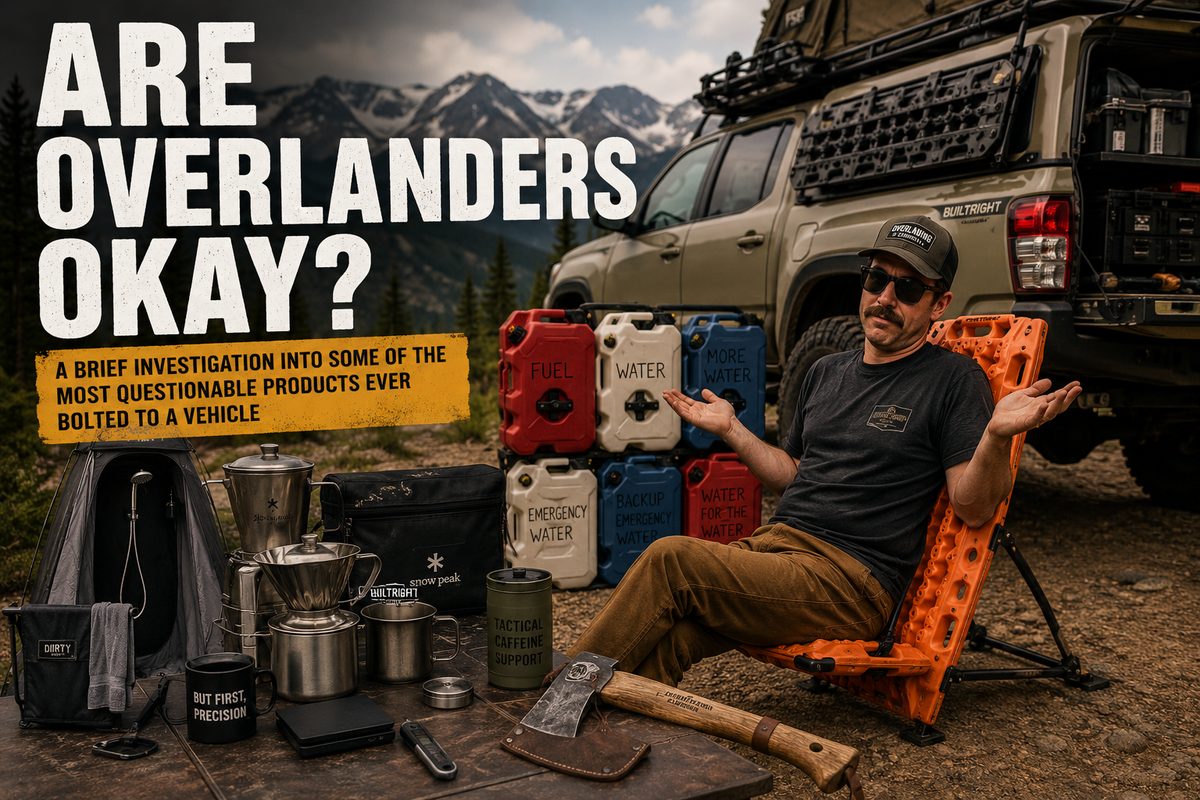
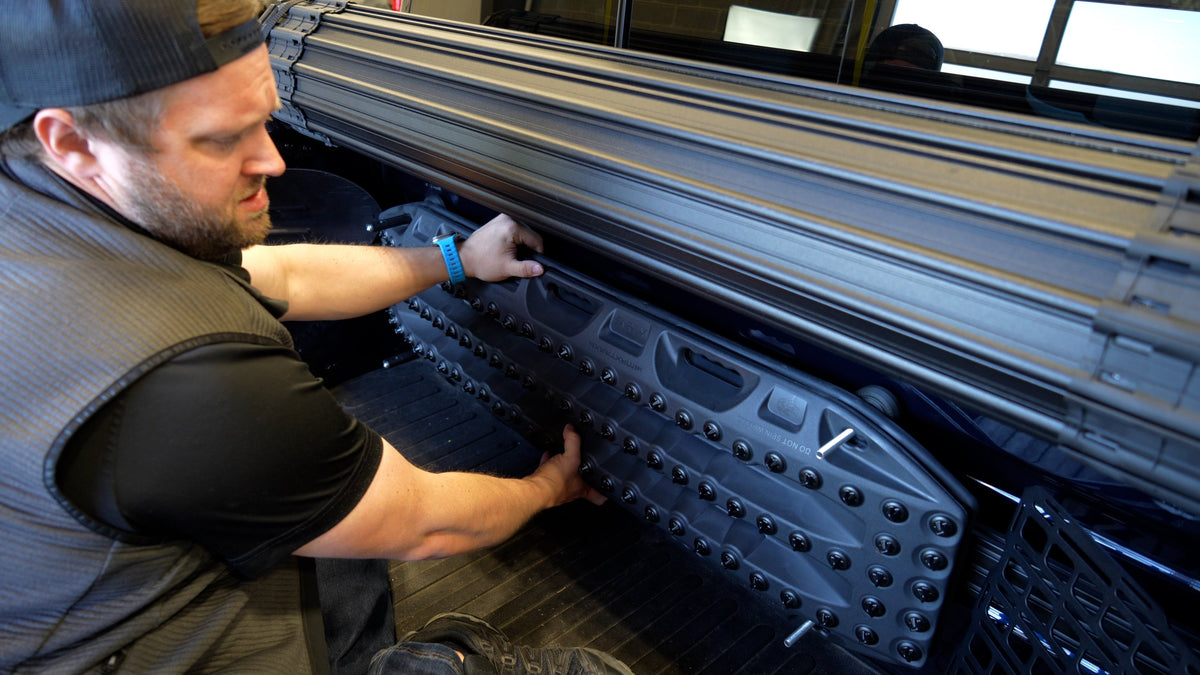
The Traction Chair is a system that converts your recovery boards into a camp chair. The idea is simple: your traction boards are already taking up space, so why not make them pull double duty as furniture? (Koodoo Gear)
On paper, it sounds brilliant.
In reality, it raises several questions.
First, if you're carrying MAXTRAX, you're already carrying enough gear to survive a minor geological event. Was the folding camp chair really the item pushing you over the edge? It seems like for the same or even smaller footprint, some ultralight camp chairs would be a better buy.
Second, recovery boards are specifically designed to be covered in mud, sand, snow, and whatever mystery substance is currently coating the trail.
Now imagine sitting on that.
For $119.99, you too can experience the comfort of a lawn chair designed by a tire. (Koodoo Gear)
Admittedly, as innovators ourselves, we respect the creativity.
At some point, coffee stopped being a beverage and became a personality trait.
Modern overland coffee setups range from "slightly excessive" to "NASA mission critical."
You'll roll into camp and watch someone unpack:
Then there are products like the $239 Snow Peak Field Coffee Master Set, which somehow combines a kettle, dripper, coffee press, and camp cookware into a beautifully engineered stainless steel monument to caffeine.
To be fair, it's objectively cool.
It's also the kind of product that makes you wonder how we arrived here as a society.
A hundred years ago, a cowboy made coffee by throwing grounds into a pot and hoping for the best.
Today, an overlander can produce a single cup of coffee using a process that resembles a chemistry experiment.
The best part is that these setups are almost always photographed on a tailgate covered in premium outdoor gear, with a mountain in the background and a caption about slowing down and simplifying life.
Simplifying life.
With a coffee system that has more components than the fuel system on a 1997 Tacoma.
And somehow, despite all of this, we completely understand the appeal.
Because if you're already carrying $5,000 worth of camping equipment to spend a weekend pretending you're surviving in the wilderness, what's another meticulously crafted titanium coffee gadget?
At least you'll have excellent coffee while explaining to your friends why your camp espresso setup requires its own storage solution.
Every overland vehicle appears to require at least one axe.
Sometimes two.
The average overlander will drive 4,000 miles annually, split approximately three pieces of firewood, and spend the remaining 364 days displaying a beautifully mounted Scandinavian forestry tool that cost more than their first car.
The axe isn't really a tool anymore.
It's jewelry.
Truck jewelry.
You know the one.
The shower tent that's somehow larger than the actual sleeping area.
It folds out into a structure that resembles a temporary embassy.
Inside is a shower system, changing room, towel rack, lighting package, and enough plumbing to support a small apartment complex.
At this point you've built a bathroom.
You own a bathroom.
You've transported a bathroom hundreds of miles into the wilderness.
Congratulations.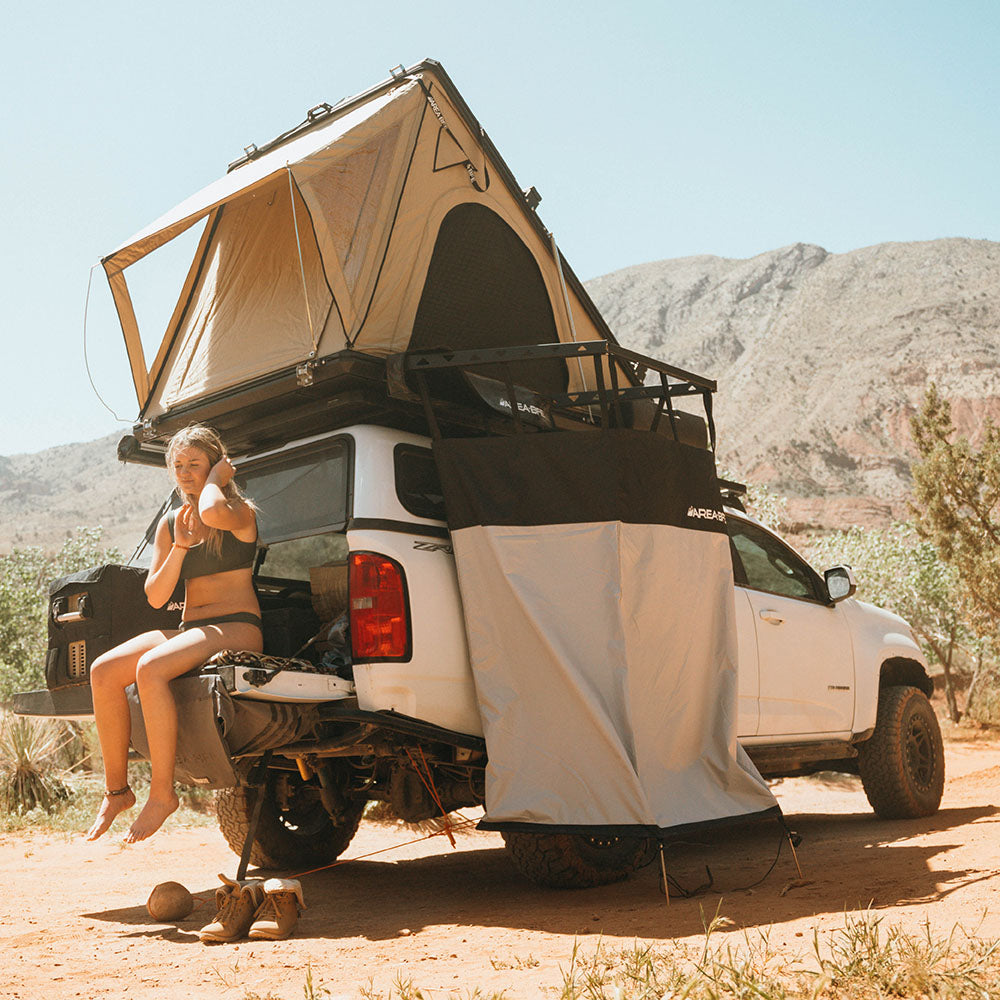
There's a fascinating point in every overland build where someone accidentally recreates their house.
Sink.
Countertop.
Pantry.
Cutlery drawer.
Spice rack.
Dish drying station.
Paper towel holder.
Magnetic knife strip.
If your camp kitchen has more square footage than your first apartment, it may be time to reevaluate things.
One fuel can makes sense.
Two fuel cans can make sense.
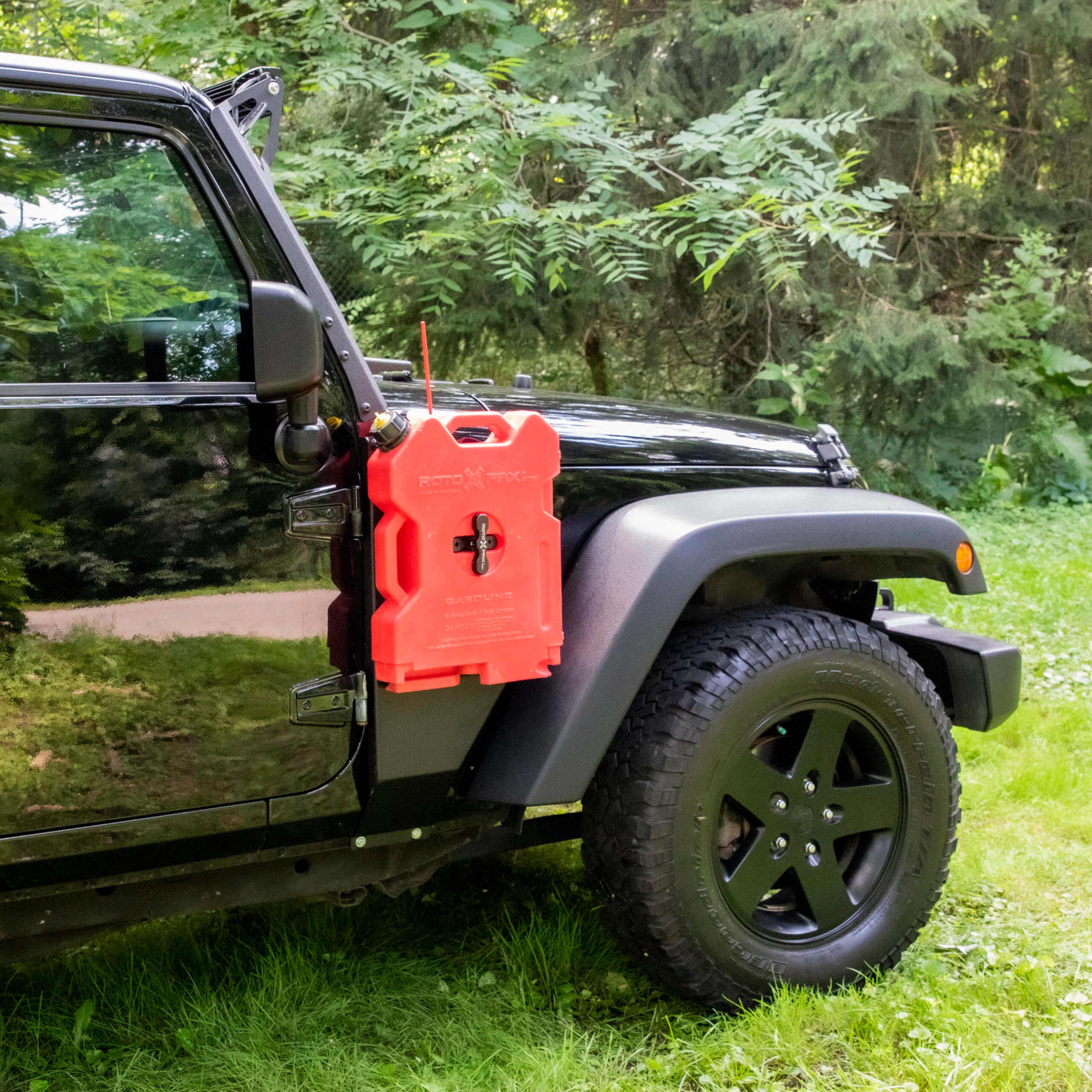
But every overlander knows a vehicle with six Rotopax containers mounted in twelve different locations.
Fuel.
Water.
Emergency water.
Backup emergency water.
Just-in-case water.
Water for the water.
At some point the truck begins resembling a support vehicle for a moon landing.
Here's the thing.
We love this stuff.
The overland community is full of creative people who enjoy building, modifying, and improving their vehicles. Half the fun is solving problems, even if those problems are entirely self-created.
Do you need a traction board that becomes a chair?
Probably not.
Do you need a shower tent with enough amenities to qualify for property taxes?
Definitely not.
But overlanding has never really been about need.
It's about the journey, the adventure, the gear discussions around the campfire, and occasionally convincing yourself that a product exists because it's innovative and not because someone had a manufacturing quota to hit.
So the next time you see a traction board chair, a tactical espresso machine, or an axe mounted where an axe has no business being mounted, don't laugh.
Well...
Maybe laugh a little.
Just remember that somewhere on your truck is a product somebody else thinks is ridiculous too.
And honestly, that's part of the fun.
How to Build a RETRAX Compatible Bedside MOLLE Rack System for Your Ford Truck
Slate's Preorder Window Is Closing - And The Price Leak Might Have Changed Everything