

Estimated Ship Date
It's pretty hard to look at Ford's new Ranger Super Duty 6x6 and not immediately start wondering what it would be like to actually own one.
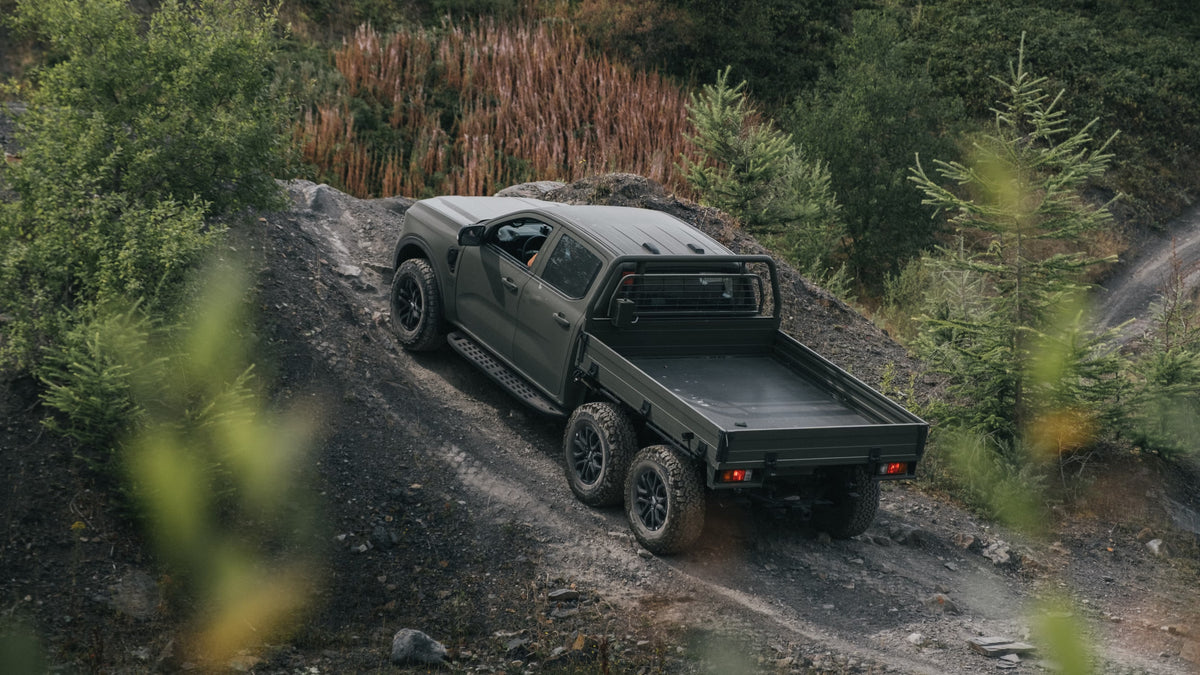
Ford recently teamed up with General Dynamics Land Systems-UK and engineering company Ricardo on a six-wheel version of the Ranger Super Duty as part of a proposal for the British Army's Light Mobility Vehicle program. The resulting truck looks like something you'd expect to see in a military convoy or parked outside a special forces compound, not sitting in the Ford commercial truck lineup.
And while the extra axle is obviously the first thing that grabs your attention, the more interesting part of this truck is what it represents. Ford isn't simply taking a Ranger, adding another axle and calling it good. The Ranger Super Duty was developed as a highly capable platform that can be adapted for specialized applications, and the 6x6 is a pretty extreme example of what can happen when you start with a solid foundation and build around a specific job.

Before getting to the six-wheel version, it's worth looking at the Ranger Super Duty itself.
The truck was developed primarily for markets outside North America and is aimed at customers who need more capability than a conventional midsize pickup can provide. It uses a 3.0-liter turbodiesel V6 producing 600 Nm of torque, or roughly 443 lb-ft, and Ford rates it for up to 4,500 kilograms of towing capacity and 1,982 kilograms of payload.
It also gets a number of upgrades that separate it from a typical Ranger, including a reinforced chassis, upgraded suspension and drivetrain components, a locking front differential, larger brakes and an eight-lug wheel setup. Ground clearance is nearly 12 inches and maximum wading depth is approximately 33.5 inches.
In other words, this isn't just a Ranger with a heavier-duty option package.
It's designed from the beginning to be a workhorse.
That's important because the 6x6 concept isn't really about turning a normal Ranger into something completely ridiculous. It's about taking an already-capable platform and adapting it to a job that requires even more capability.
The obvious answer is that six wheels look cool, but there are some very practical reasons for doing it.
The biggest one is load distribution.
The Ranger Super Duty already has an impressive payload rating, but once you start adding equipment, armor, personnel, communications equipment and other mission-specific gear, there are limits to how much weight you can reasonably ask a single rear axle to carry.
Adding another axle allows that weight to be spread across a larger footprint and gives engineers considerably more flexibility when designing the vehicle around a particular mission.
There's also an obvious advantage when it comes to traction and mobility. More driven wheels can help distribute available torque across the vehicle and provide additional contact with the ground when conditions get ugly.
That's particularly useful for a vehicle that might spend its life on mud, sand, loose gravel, steep terrain or roads that aren't really roads at all.
For the average truck owner, none of this means we need to start shopping for a third axle. But it does illustrate something that has become increasingly important in the truck market: capability isn't necessarily about one giant upgrade. Sometimes it's about changing the overall architecture of the vehicle to make it better suited to the job.

This is probably the part of the story that's most interesting from a truck enthusiast's perspective.
Ford isn't pitching the Ranger Super Duty as one specific vehicle. The platform can be configured for different applications, including utility vehicles, troop carriers, protected vehicles and ambulances. The 6x6 is simply one way of adapting the platform to meet a particular requirement.
That's a concept we're very familiar with in the aftermarket.
Most people don't buy a truck because they expect it to be perfect for one very specific task. They buy a capable platform and then modify it based on how they actually use it.
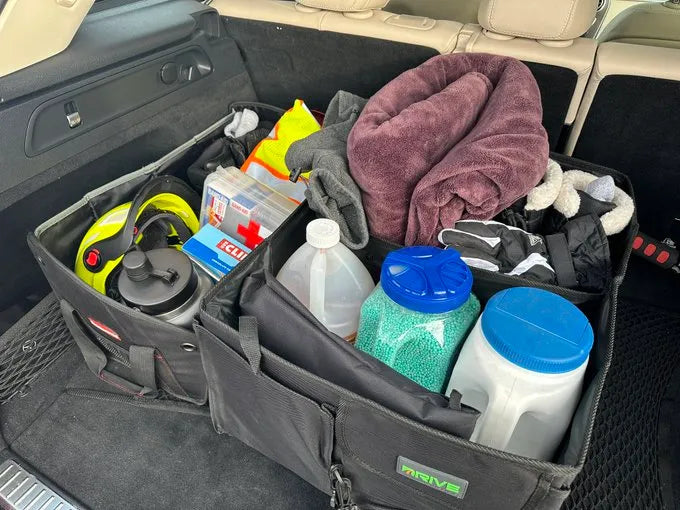
A contractor might need secure storage for tools and equipment. Someone who spends weekends hunting might need room for recovery gear, firearms and outdoor equipment. An overlander might prioritize water, food, camping gear and communications equipment. Someone who uses their truck as a daily driver may simply want to keep emergency equipment and everyday gear organized without sacrificing the usable space in the cab.
The base truck is the same. The way it's configured is completely different.
The military has essentially taken that concept and turned the dial all the way up.

There's a reason the aftermarket exists in the first place.
Automakers have to build vehicles that work for a huge number of people. They can't build a truck around one owner's particular combination of hobbies, tools, equipment and priorities.
Instead, they build a platform that can handle a broad range of jobs and leave room for the owner to make it their own.
That's why the most useful truck accessories aren't necessarily the ones that dramatically change the truck. They're the ones that make the truck work better for the person behind the wheel.
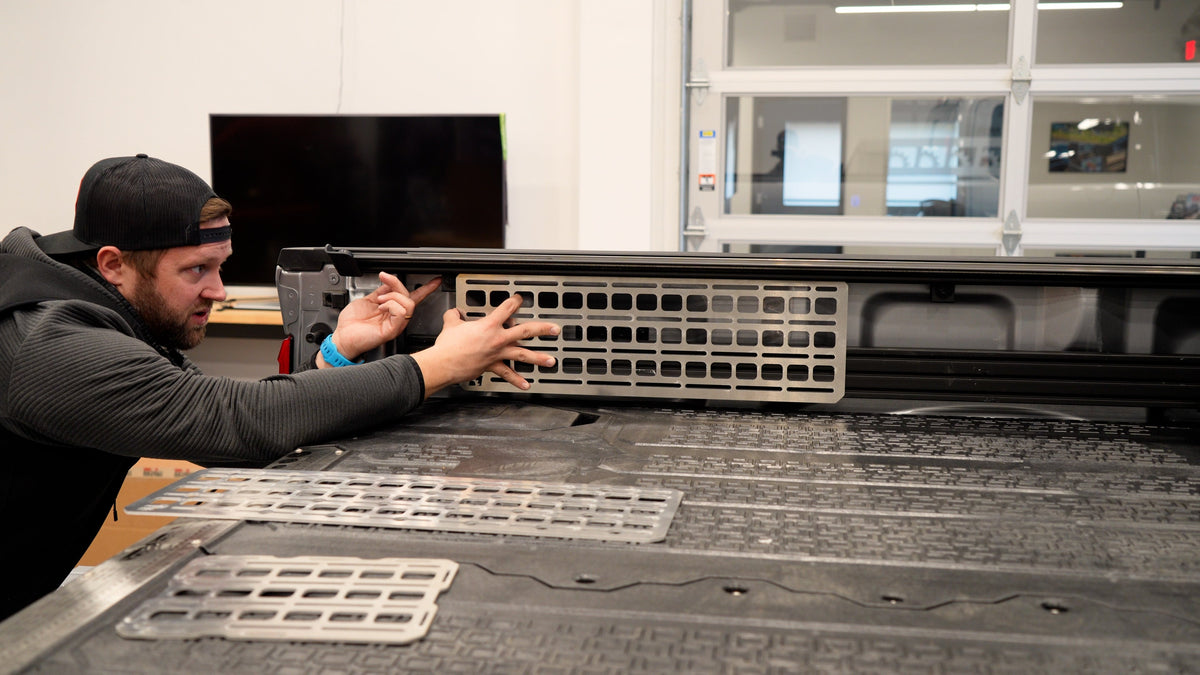
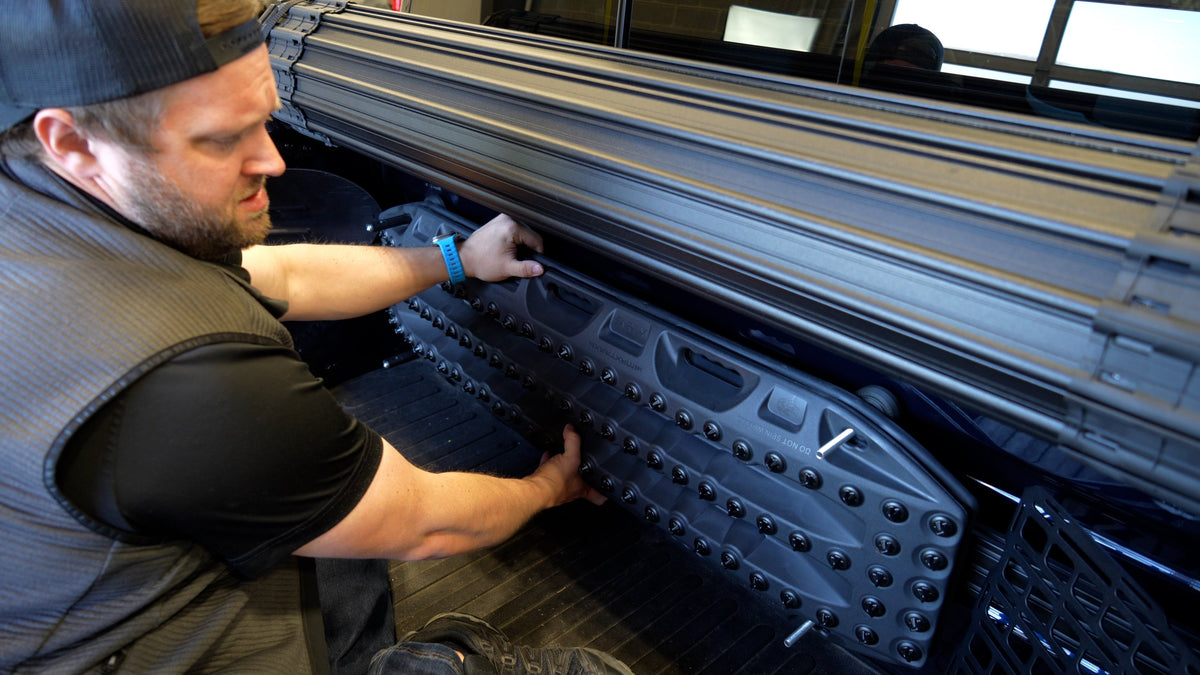
Adding storage doesn't change the basic purpose of a pickup. It just gives you a better way to carry the things you're already taking with you. A bed rail doesn't change the truck's suspension or engine. It gives you another place to mount equipment. A MOLLE panel doesn't make the truck more capable on a spec sheet, but it can make a huge difference when you're trying to keep recovery gear, tools or everyday equipment organized and accessible.
The same basic philosophy is behind the Ranger 6x6.
Start with a capable platform, then build it around the mission.
The 6x6 Ranger is obviously an extreme example, but the underlying trend is showing up everywhere in the truck market.
Manufacturers are increasingly designing vehicles with different factory configurations, off-road packages and accessory options. Trucks are getting more specialized from the factory while still maintaining enough flexibility for owners to customize them further.
Look at the current midsize truck market and you'll find everything from basic work trucks to high-performance desert runners and factory-built overland rigs. The same basic idea exists in the full-size market, where manufacturers are offering increasingly specialized versions of their pickups for towing, off-roading, hauling and everyday use.
The result is that the modern truck is becoming less of a finished product and more of a starting point.
That's a pretty good thing for enthusiasts.
Truck marketing has always loved big numbers.
Horsepower. Torque. Towing capacity. Payload. Ground clearance. Tire size.
Those numbers matter, but they don't tell the whole story.
A truck's usefulness depends on how all of those things work together.
A vehicle with massive horsepower but inadequate storage isn't necessarily a better truck for someone who spends every weekend carrying equipment. A truck with enormous towing capacity doesn't help much if everything you need inside the cab ends up piled on the floor.
Likewise, adding another axle isn't useful simply because six wheels are better than four. It makes sense because the entire vehicle has been engineered around the additional capacity and the missions it's expected to perform.
That's an important distinction in the aftermarket too.
The best modifications aren't necessarily the ones that make the biggest visual statement. They're the ones that solve an actual problem.
As cool as the Ranger Super Duty 6x6 is, American buyers shouldn't start calling their local Ford dealer just yet.
The Ranger Super Duty is primarily intended for markets outside the United States, and the 6x6 being discussed here is part of a proposal for the British Ministry of Defence.
That's probably for the best from a practical standpoint. A six-wheel military truck would be an absurd amount of vehicle for most people.
It would also be incredibly fun.
The Ranger Super Duty's combination of a diesel engine, serious payload capacity, high ground clearance and heavy-duty running gear already makes it an interesting truck. Add another driven axle and a bunch of military equipment and you've got the sort of vehicle that would probably attract a crowd at any Cars & Coffee event.
Even if you couldn't explain exactly why you needed it.
That's really what makes this truck worth talking about.
The six-wheel configuration is the part that's going to get the clicks, and honestly, that's fine. We're truck people. We like weird stuff, and a 6x6 Ranger definitely qualifies.
But underneath the spectacle is a pretty sensible idea.
Build a strong, capable platform that can be adapted for different jobs instead of designing an entirely new vehicle every time the requirements change.
The military benefits because it can potentially use one platform across multiple applications. Manufacturers benefit because they can share components and production infrastructure. And the end user benefits because the vehicle can be configured around the work it actually needs to do.
That's not all that different from what happens in the civilian truck market.
A truck is a starting point.
What you add to it, how you organize it and how you configure it ultimately determines how useful it becomes.
Most of us aren't hauling military equipment through a war zone, so there's a pretty good chance that a third axle isn't going to make our trucks more useful.
But the thinking behind it is worth paying attention to.
The best trucks are adaptable. They can haul something on Monday, tow something on Saturday, handle a rough trail when necessary and still function as a comfortable daily driver the rest of the week.
That's why the aftermarket continues to matter even as trucks become more capable from the factory.
Manufacturers can give us better platforms, but they can't know exactly what every owner is going to do with one.
That's where we come in.
The Ranger Super Duty 6x6 takes that idea to an almost comical extreme. It's a truck platform that can be configured for completely different missions, with the six-wheel version representing just one possible configuration.
And while most of us will never need three axles, there's something pretty cool about the idea behind it.
Build a capable platform, then make it work for the job.
That's what truck owners have been doing for generations. Ford just happens to be doing it with six wheels.
BuiltRight Labor Day Sale - Up to 20% Off Truck Accessories
The Trucks Can BREATHE: aFe Power Exhaust and Intake Upgrades for Our Raptor-Killer Builds