

Estimated Ship Date
What started as a wild idea for a factory Baja truck turned into one of the most impressive suspension systems ever offered on a production pickup.
I’ve been spending a lot of time looking at suspension options for my Ram 1500 build lately, and that rabbit hole inevitably led me back to the Ford F-150 Raptor.
There are plenty of aftermarket suspension companies making incredible products. There are trucks with bypass shocks, remote reservoirs, long-travel kits, hydraulic bump stops and suspension systems that cost more than some used vehicles.
But there’s something particularly impressive about what Ford has managed to put on a truck you can walk into a dealership and buy.
The Raptor’s suspension isn't just "a regular truck with big shocks." From the beginning, Ford designed the Raptor around the idea that a production pickup should be capable of traveling quickly over terrain that would absolutely punish a conventional suspension.
And over three generations, Ford has continued refining that idea.
In fact, Ford itself describes the suspension as the Raptor's crown jewel. After digging into how the system evolved, I can understand why.
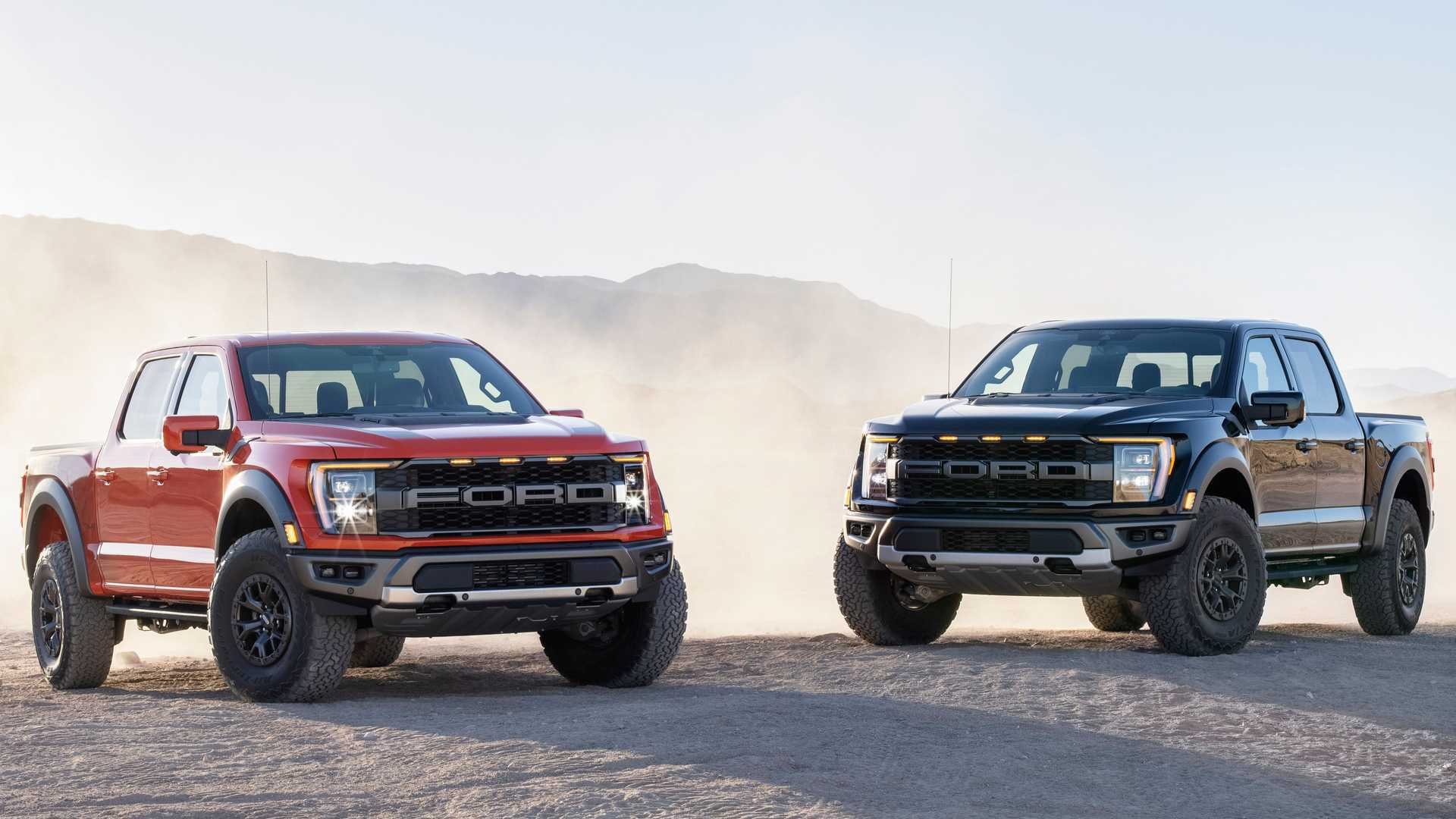
The original F-150 Raptor arrived for the 2010 model year, although Ford had already shown the concept to the world at SEMA in 2008.
The idea was simple enough: take a full-size pickup and build it from the factory to go fast in the desert.
That's very different from the way most off-road trucks are designed.
A typical 4x4 is built around the idea of crawling over obstacles, maintaining traction and surviving difficult terrain. The Raptor was designed with another question in mind:
What if you want to go really, really fast?
That changes almost everything about suspension design.
At high speed, suspension travel becomes incredibly valuable. The wheels need to be able to move through large amounts of compression and rebound without transferring every impact directly into the chassis. The suspension needs to absorb energy while keeping the tires planted.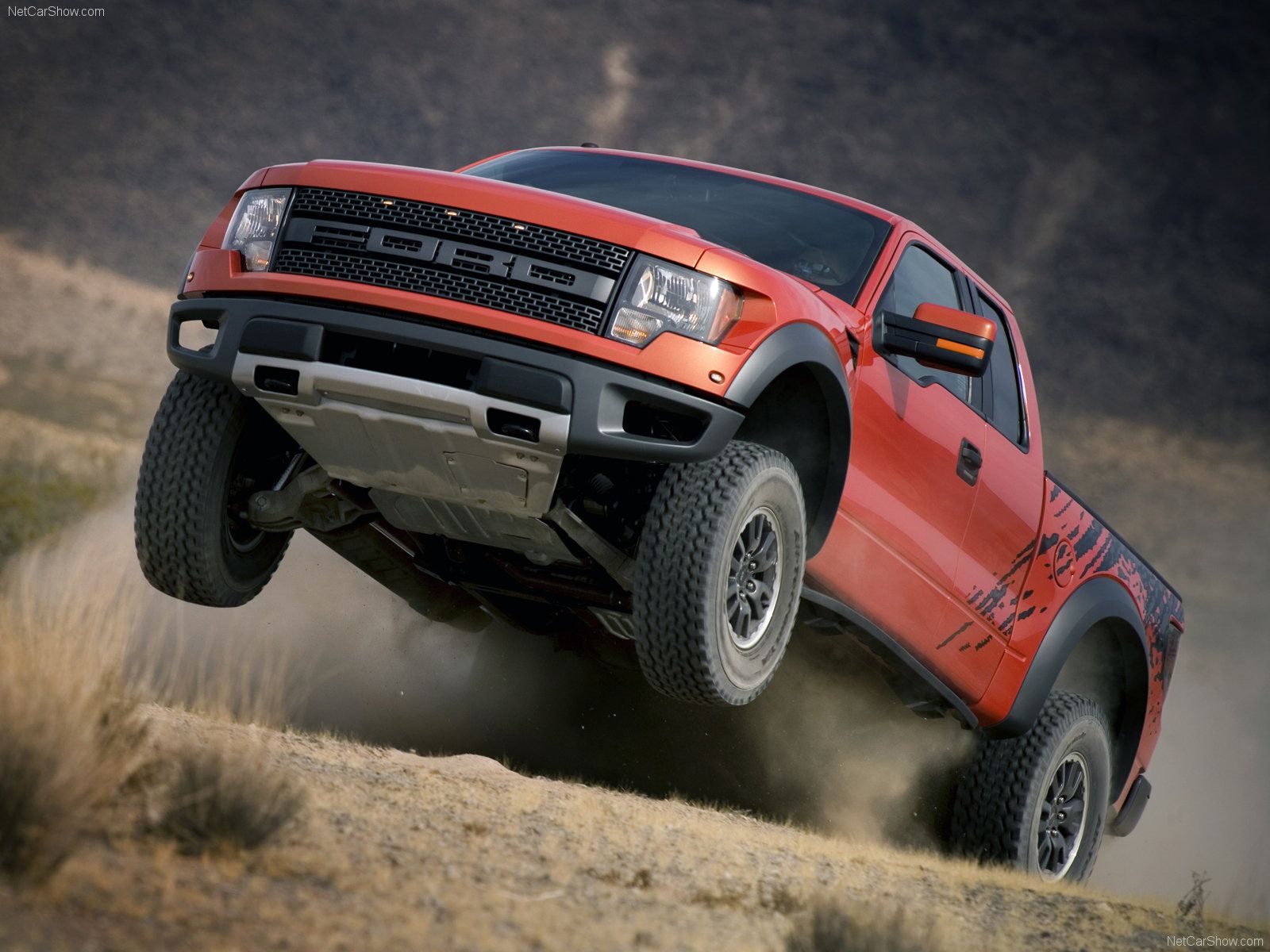
And Ford didn't simply throw longer springs and bigger shocks at an F-150.
The first Raptor received 2.5-inch FOX internal-bypass shocks with long-travel suspension specifically developed for high-speed off-road driving. Ford's own description of the original truck is remarkably close to the goal of a trophy truck: high-speed capability combined with durability and a surprisingly comfortable ride.
That was 2010.
And it was already pretty ridiculous for a factory pickup.
When the second-generation Raptor arrived for 2017, Ford didn't simply repeat the formula.
The FOX shocks grew from 2.5 inches to 3 inches in diameter, while suspension travel increased substantially. Ford quoted 13 inches of front travel and 13.9 inches of rear travel on the new truck, compared with 11.2 and 12 inches respectively on the outgoing Raptor.
But the really interesting part wasn't simply making everything bigger.
It was the internal bypass technology.
A conventional shock has a relatively straightforward job. As the suspension moves, the shock forces oil through its valving, creating resistance to movement.
An internal-bypass shock is considerably more sophisticated.
Instead of providing the same basic damping characteristics throughout the entire stroke, the shock can provide different levels of damping depending on where the piston is within its travel.
That means the suspension can be relatively compliant through normal movement, become progressively more controlled as it approaches the extremes of travel, and provide additional resistance before bottoming out.
In other words, you don't necessarily have to choose between:
Soft ride or aggressive control.
The shock can be engineered to provide both.
That's a huge part of what makes the Raptor so interesting.
The third-generation Raptor, introduced for 2021, took the concept another step further.
This time Ford paired FOX internal-bypass hardware with Live Valve electronic control.
The shocks remained enormous, with 3.1-inch dampers, but now the truck could electronically vary compression damping based on the conditions. Ford's technical specifications list continuously variable electronic compression damping, with 14 inches of front travel and 15 inches of rear travel on the standard-tire configuration.
And this is where the Raptor suspension starts to feel less like conventional truck suspension and more like a computer-controlled performance system.
The truck can change the behavior of the dampers depending on drive mode and what the suspension is doing.
The hardware still matters enormously. The software doesn't magically turn a bad shock into a good one.
But combining sophisticated mechanical valving with electronic control gives Ford another tool for solving the fundamental suspension problem:
You want the suspension to behave differently at different times.
You want a compliant ride when you're cruising down the highway.
You want controlled body movement when you're pushing through a corner.
You want the suspension to absorb repeated whoops at high speed.
And you want substantially more damping when the truck is deep into its suspension travel.
One fixed shock tune can't be perfect for all of those situations.
Live Valve gets much closer.
One of the biggest changes to the third-generation Raptor was actually behind the cab.
Ford moved to a completely new five-link rear suspension (hey, my ram has that!) with extra-long trailing arms, a Panhard rod and massive 24-inch coil springs.
That's important because the rear axle isn't just along for the ride.
When you're flying across uneven terrain, you need to control where that axle goes.
The longer trailing arms help maintain axle position through the suspension's travel while allowing the rear end to articulate. The coil springs provide the support, while the FOX dampers control the movement.
And then there's the travel.
With the standard tires, the 2021 Raptor has 14 inches of front suspension travel and 15 inches at the rear. Even when equipped with the optional 37-inch tires, Ford still managed 13 inches of front and 14.1 inches of rear travel.
That's an absurd amount of movement for something that is delivered with a warranty and expected to drive to the grocery store.
The factory 37-inch tire option is another part of the Raptor formula that I think is easy to overlook.
It's tempting to think of 37s as mostly a visual upgrade.
They're not.
A larger tire provides additional ground clearance and changes the way the tire interacts with obstacles. It also gives the suspension more opportunity to absorb terrain before the chassis encounters it.
But there's an important compromise.
Ford's own specifications show that choosing the 37-inch tires actually reduces available suspension travel slightly. That's because the larger tires require changes to the suspension geometry and packaging.
That's a good reminder that suspension engineering is almost always a series of compromises.
There's no magic combination where everything gets better simultaneously.
The impressive part is how well Ford balances those compromises.
This is probably the biggest lesson I've taken away from looking at Raptor suspension while thinking about my Ram build.
It's tempting to compare suspension components individually.
These shocks are better.
Those control arms are stronger.
This spring is taller.
That kit has more travel.
But the Raptor isn't impressive because Ford installed some really expensive FOX shocks.
It's impressive because the entire truck was engineered around the suspension.
The springs, shocks, control arms, geometry, bump stops, chassis, tires, electronics and drive modes all work together.
Even the suspension tuning itself is the result of Ford Performance and FOX working together rather than simply bolting an off-the-shelf shock onto an F-150. Ford says its engineers used computer-aided engineering and real-world testing to tune everything from spring rates and ride height to shock valving and the different damping zones.
That's the part that aftermarket builds often struggle to replicate.
You can buy incredible individual components.
It's much harder to make all of those components work together.
The Raptor wasn't designed to be the best rock crawler.
It wasn't designed to tow the most.
It wasn't designed to have the highest payload.
It was designed around a very specific mission:
Go extremely fast over extremely rough terrain, repeatedly, without destroying itself.
And Ford has spent more than 15 years refining that mission.
The evolution is fascinating when you look at it chronologically.
The first generation introduced 2.5-inch passive internal-bypass FOX shocks.
The second generation increased the shock size to 3 inches and pushed suspension travel even further.
The third generation added 3.1-inch FOX Live Valve dampers, electronic control and an entirely new five-link rear suspension.
Ford says the development of each generation was driven by the same philosophy: use racing to push technology into production vehicles.
That's something I really appreciate about the Raptor.
It's not an off-road appearance package.
It's a production vehicle built around a legitimate engineering objective.
As I continue working through suspension options for my Ram 1500, the Raptor is becoming less of a vehicle to copy and more of a benchmark to understand.
Instead, I'm asking what Ford got right.
How much travel do I actually need? What should the spring rate be? How much damping is appropriate? Where should the shock control the suspension? How much bottom-out resistance do I need? Should I prioritize high-speed desert performance, trail capability, towing, highway comfort or some combination of all four?
Those are much better questions than simply asking, "What lift kit should I buy?"
And that's probably the biggest takeaway from the Raptor.
Good suspension isn't about making a truck taller (yee- haw).
It's about controlling the movement of the truck.
The Raptor just happens to be one of the best examples of a manufacturer understanding that distinction.
After 15 years of development, Ford has turned the F-150 Raptor into something pretty rare: a factory pickup where the suspension isn't merely one of the components that makes the truck work.
The suspension is the reason the truck works.
And honestly, as someone currently trying to figure out how to make a Ram 1500 suspension better, that's a pretty intimidating benchmark.
But it's also a damn good place to start.

BuiltRight Rear Seat Release: Taking Hidden Ford Truck Storage Further
BuiltRight Labor Day Sale - Up to 20% Off Truck Accessories